
If your dog tears through every chew in minutes, you need denser, harder, bigger chews and the right safety checks.
Pick items by density, hardness, size match, and low moisture.
Those features keep even powerful jaws busy longer.
Antlers and yak chews usually outlast bully sticks, while rubber or nylon trade edibility for toughness.
This quick guide shows what to look for, how to size chews safely, and when to step in during chew time.
By the end you’ll know which chews actually last for aggressive chewers and how to keep your dog safe while they enjoy them.
Key Factors for Selecting Long‑Lasting Chews for Aggressive Chewers
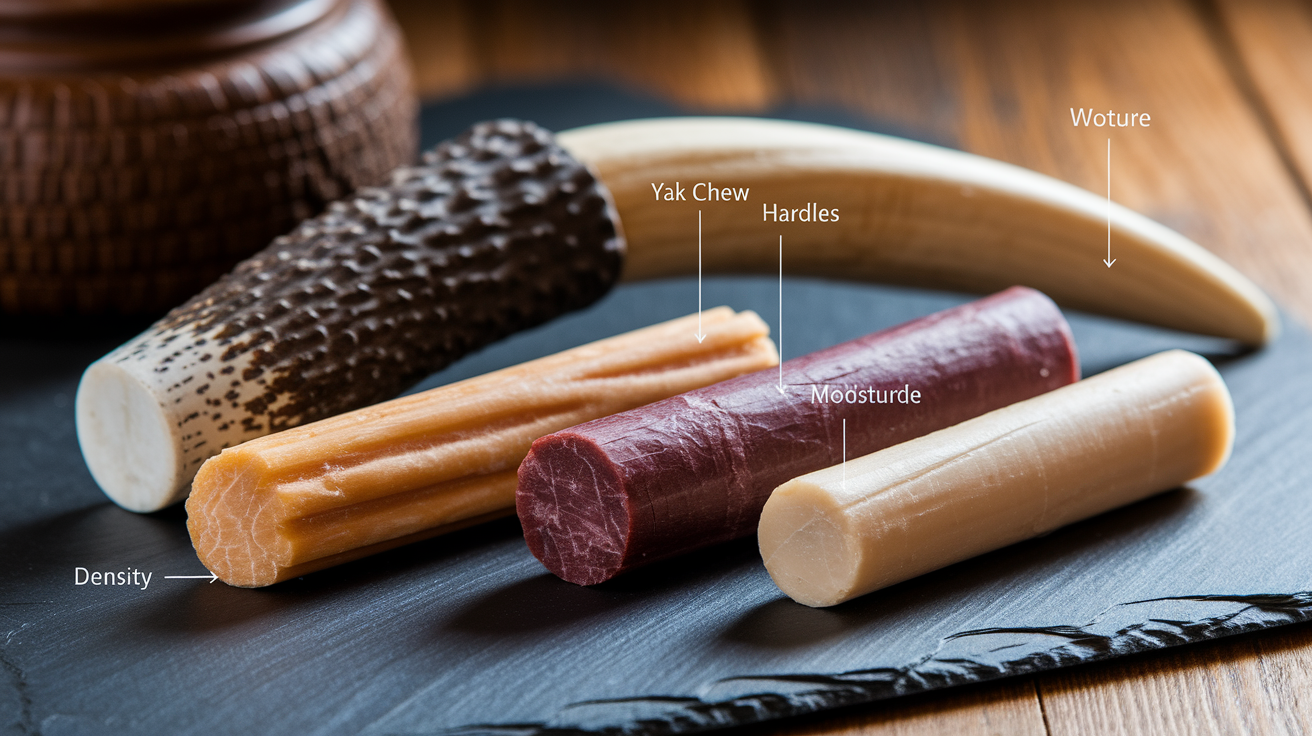
Picking the right chew for an aggressive chewer comes down to a few basics: density, hardness, size, and how much moisture is in it. Harder chews made from dense stuff last way longer because they don’t fall apart under constant jaw pressure. Yak chews get smoke-dried for weeks and turn incredibly dense. Antlers are naturally hard and can hold up to extreme chewing for days, sometimes weeks. Softer chews or anything with high moisture? Gone in minutes. Quick test: if a chew doesn’t survive longer than 10 minutes with your dog, it’s not built for serious chewing.
You’ve also got to match the hardness and size to your dog’s weight and bite force. What works for a 15-pound terrier becomes a choking hazard for a 70-pound pit bull. Size the chew bigger than your dog’s muzzle. When you’re not sure, go bigger. BetterBone’s HARD tier and products like Deer Bone and Yak Milk Bone are made for dogs who wreck standard chews. These give you the structural toughness that keeps even powerful jaws busy for hours.
Safety means watching your dog. The first 15 to 20 minutes with any new chew should be supervised so you can check for splintering, sharp edges, or whether your dog’s trying to gulp down large pieces. Take the chew away once it gets smaller than about an inch or starts breaking into hard chunks. Keep water nearby because hard, dry chews make dogs thirsty. If your dog starts gulping pieces or the chew shows signs it’s falling apart fast, stop and try something else.
What to look for:
- Density and hardness – Harder chews like antlers and yak chews outlast softer treats.
- Moisture content – Air-dried or smoke-dried chews last longer than high-moisture options.
- Size match – Pick chews larger than your dog’s muzzle. Size up for powerful chewers.
- Ingredient simplicity – Single or limited ingredients (1 to 3 items) mean stronger structure.
- No artificial softeners – Skip chemical treatments that weaken the chew.
- Durability benchmark – Aim for chews that survive more than 10 minutes under aggressive chewing.
Material Types for Long-Lasting Chews and Their Durability Differences

Natural chews like yak chews, antlers, bully sticks, and collagen sticks all have different durability levels based on their density and how they’re processed. Yak chews are made from three ingredients (milk, lime, and salt), then smoke-dried for weeks, which creates an extremely hard product that lasts. Antlers are shed naturally and they’re among the hardest chews you can find. Rich in calcium, resistant to splintering. Bully sticks and collagen sticks are softer but still tougher than average treats. They usually last one to several chewing sessions and they’re fully digestible. The big difference is moisture: air-dried or smoke-dried chews have low moisture, which makes them harder and slows breakdown.
Synthetic options like nylon and rubber can be durable, but there are trade-offs. Nylon chews often get treated with artificial colors, flavors, or chemical softeners that reduce their strength and add unwanted stuff. Rubber chews designed for power chewers can last a long time, but they’re not edible and they serve a different purpose. They don’t give you the digestibility or natural ingredient benefits you get from animal-based chews. For aggressive chewers who need both engagement and nutrition, single-ingredient natural chews perform better and have fewer processing chemicals.
| Material | Durability Level | Digestibility | Notes |
|---|---|---|---|
| Antlers | Very High | Non-digestible (gnawing) | Naturally shed, extremely hard, calcium-rich |
| Yak Chews | Very High | Digestible (can microwave last inch) | Smoke-dried for weeks, 3 ingredients |
| Bully Sticks | Medium-High | Fully digestible | 100% beef, no splintering, lasts 1–several sessions |
| Collagen Sticks | Medium | Fully digestible | Safer alternative to rawhide, supports joints |
| Nylon/Rubber | High (non-edible) | Non-digestible | May contain additives; not a food-based chew |
Safety Guidelines for Aggressive Chewers to Prevent Choking and Splintering
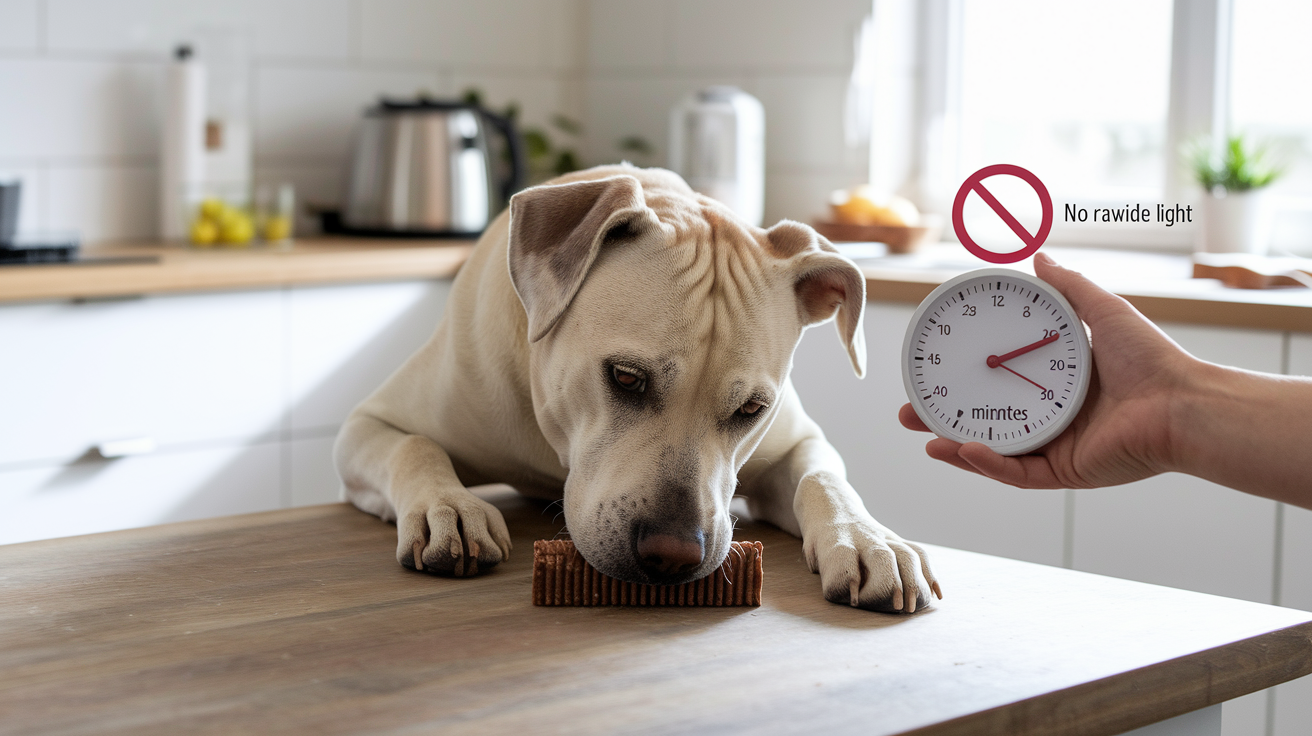
Aggressive chewers need chews that won’t splinter, break into sharp pieces, or get small enough to swallow whole. Stay away from rawhide. It’s heavily processed, poorly digestible, and can be a choking risk. Cooked bones are off-limits because they splinter into sharp shards that can cause internal damage. Overly small chews are dangerous for large, powerful dogs who can swallow them in one gulp. The rule: once a chew reaches about one inch in size, take it away and replace it.
Between sessions, check the chew for cracks, sharp edges, or big broken pieces. If the chew is making hard chunks that your dog could swallow, stop using it. Hydration matters too. Hard, dry chews make dogs thirsty, so keep fresh water nearby during chew time. Start every new chew with a 15 to 20 minute supervised session so you can see how your dog handles it and catch any issues early.
Safety rules:
- Size the chew larger than your dog’s muzzle to prevent swallowing.
- Supervise the first 15 to 20 minutes with any new chew.
- Remove chews once they reach about one inch in size.
- Inspect chews between sessions for cracks, splintering, or sharp edges.
- Avoid rawhide, cooked bones, and very small chews for large dogs.
- Provide fresh water during chew sessions.
- Stop using any chew that produces large, hard fragments your dog might swallow.
Comparing Long-Lasting Chew Categories for Aggressive Chewers
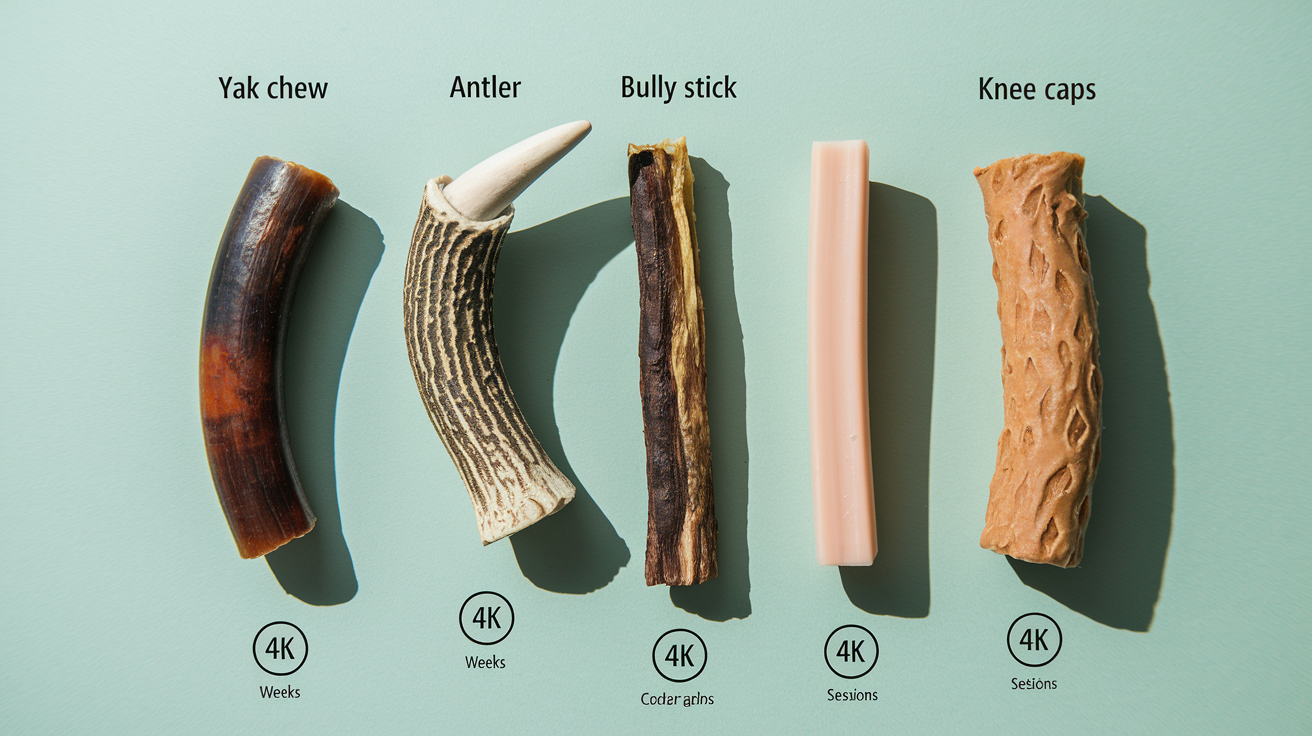
Yak chews and antlers are the longest-lasting options, built for dogs who destroy standard chews in minutes. Yak chews are smoke-dried for weeks, creating a dense texture that can last from a few sessions to several weeks depending on how hard your dog chews. When the chew gets down to about an inch, you can soak it in water and microwave it for around 45 seconds to puff it into a crunchy treat. Antlers are naturally shed, extremely hard, and resistant to splintering. Perfect for extreme chewers who need something that won’t break apart under constant pressure.
Bully sticks and collagen sticks offer mid-level durability with full digestibility. Bully sticks are 100 percent beef, single-ingredient, and safe because they don’t splinter. They usually last one to several chewing sessions, making them a good option for dogs who need protein-rich engagement without the rock-hard resistance of antlers. Collagen sticks are made from beef hide, but they’re denser and safer than rawhide, plus they support joint and skin health. Both options are easier on the teeth than antlers while still giving you meaningful chew time.
For variety and moderate durability, consider cow knee caps, beef gullet, and cow or pig ears. Knee caps combine marrow and cartilage, offering a crunchy reward when your dog breaks through the outer layer. Beef gullet is chewy, stretchy, and high in protein and glucosamine, making it gentler on the jaw than super-hard chews. Cow and pig ears are firm but slightly flexible, a good fit for powerful chewers who aren’t quite at the extreme end. These deliver hours of engagement without the weeks-long lifespan of yak chews or antlers.
Five chew types for aggressive chewers:
- Yak chews – Extremely dense, smoke-dried for weeks, can be revived in the microwave. Lasts from several sessions to several weeks.
- Antlers – Naturally shed, very hard, calcium-rich, resistant to splintering. Longevity measured in weeks.
- Bully sticks – Single-ingredient beef, fully digestible, no splintering. Lasts one to several sessions.
- Collagen sticks – Digestible alternative to rawhide, supports joints. Moderate durability across multiple sessions.
- Cow knee caps, gullet, ears – Mid-level durability, engaging textures, good for variety. Typically consumed in one to several sessions.
Matching Chew Size and Hardness to Dog Breed, Age, and Weight

Weight and bite force determine which hardness level your dog can handle safely. Hard chews work best for adult dogs with strong jaws (pit bulls, German shepherds, or any heavy chewer who destroys softer treats in minutes). Softer chews are better for teething puppies, senior dogs with aging teeth, or gentle chewers who don’t apply extreme pressure. BetterBone’s HARD tier is designed for the strongest, most aggressive chewers, while their SOFT tier is meant for puppies, seniors, or dogs who chew more gently.
Size the chew larger than your dog’s muzzle. When you’re not sure, size up. A chew that’s safe for a 15-pound dog becomes a choking hazard for a 70-pound dog who can swallow it whole. BetterBone offers Small and Large sizes to match different dog weights, and the same principle applies across all chew types. Broad-jawed breeds like mastiffs or bulldogs need wider, thicker chews to prevent quick consumption, while narrow-muzzled breeds like greyhounds can handle slightly slimmer options. But length and durability still matter more than width alone.
Size and hardness matching tips:
- Match chew hardness to dog age and bite strength. Hard for adults, soft for puppies and seniors.
- Size the chew larger than the dog’s muzzle. If uncertain, choose the larger size option.
- Broad-jawed breeds (mastiffs, bulldogs) need thicker, wider chews to slow consumption.
- Teething puppies and senior dogs should use softer-density chews to protect developing or aging teeth.
Evaluating Ingredient Quality and Allergen Concerns in Long-Lasting Chews

Natural ingredients improve both safety and durability. Single-ingredient chews like bully sticks or antlers are ideal for dogs with food sensitivities because they eliminate common triggers. Avoid chews with artificial colors, flavors, parabens, BPA, phthalates, or substances of very high concern. These additives don’t improve chew performance and can introduce unnecessary risks. BetterBone’s Beef flavor contains beef, soy, and wheat, with a 1 to 2 percent dog food infusion for flavor, so you need to check for allergen tolerance before buying.
Reading ingredient lists helps you spot potential problems before your dog chews. If the list is long and filled with unfamiliar terms, the chew is likely heavily processed and may not hold up under aggressive chewing. Simpler formulations (like yak chews made from milk, lime, and salt) deliver stronger structural integrity because they rely on natural density rather than chemical binders. If your dog has a history of vomiting, loose stools, or itching after certain proteins, stick to single-ingredient options and introduce new chews one at a time with supervision.
Recognizing When to Replace a Chew and How to Test Durability
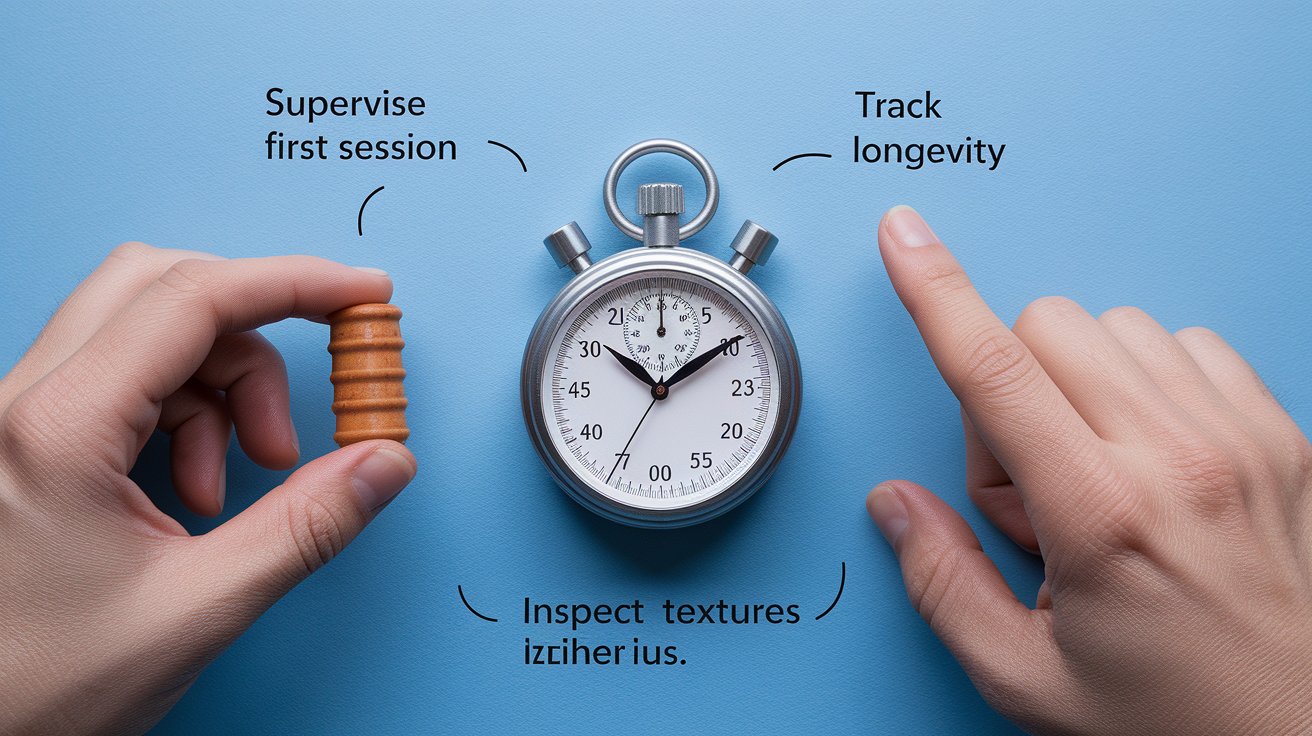
Remove any chew once it becomes smaller than about one inch or shows signs of splintering, sharp edges, or large broken fragments. A chew that’s too small can be swallowed whole, and fragments can cause choking or internal injury. Between sessions, run your fingers over the chew to feel for cracks, rough spots, or pieces that feel loose. If the chew is breaking down rapidly or producing hard chunks, stop using it and switch to a different product.
Testing durability at home is straightforward: track how long a new chew lasts across two to three supervised sessions before you leave your dog alone with it. If the chew is gone in under 10 minutes, it’s not durable enough for an aggressive chewer. If it’s producing small, soft bits that your dog can safely chew and swallow, that’s fine. But if it’s creating large, hard fragments, the chew is failing structurally and should be replaced.
Three-step at-home durability test:
- Supervise the first session – Watch for 15 to 20 minutes to see how quickly the chew wears down and whether it splinters or breaks into large pieces.
- Track longevity across 2 to 3 sessions – Note how many sessions the chew lasts before becoming too small or unsafe. Aim for chews that survive multiple sessions.
- Inspect between uses – Check for cracks, sharp edges, or fragments. Remove the chew immediately if structural failure is visible.
Cost, Sustainability, and Eco-Friendly Options for Durable Chews

Natural, eco-friendly chews like yak chews, antlers, and bully sticks are biodegradable and align with sustainable practices. BetterBone promotes naturally derived, eco-friendly formulations as part of their product line, emphasizing ingredients that break down safely in the environment. Hard, denser chews last longer, which reduces how often you need to buy replacements. Fewer purchases mean less packaging waste and lower long-term cost. A single yak chew that lasts weeks is more cost-efficient than buying a new bag of soft treats every few days.
Synthetic chews like nylon or low-quality plastic are cheaper up front but don’t biodegrade and often need to be replaced more frequently because they crack or wear unevenly. The long-term cost of durable natural chews is lower when you factor in replacement frequency and safety. Aggressive chewers go through cheap chews fast, so investing in harder, longer-lasting options actually saves money over time while supporting better environmental outcomes.
| Chew Type | Eco-Friendly? | Longevity | Cost Efficiency |
|---|---|---|---|
| Yak Chews | Yes (biodegradable) | Weeks | High (fewer replacements needed) |
| Antlers | Yes (naturally shed) | Weeks to months | Very High (longest lifespan) |
| Bully Sticks | Yes (biodegradable) | 1–several sessions | Moderate (digestible, but consumed faster) |
| Nylon/Plastic | No (non-biodegradable) | Variable (cracks/wears unevenly) | Low (frequent replacement, environmental cost) |
Final Words
Check chew durability first, look at density, hardness, and moisture, and weigh materials like yak chews, antlers, and bully sticks for lifespan.
Match chew size and hardness to your dog’s weight and bite force, start with supervised 15 to 20 minute sessions, and retire chews if they splinter or shrink below about 1 inch.
Don’t forget to read labels for simple ingredients and avoid artificial additives.
Use this quick guide on how to choose long-lasting chews for aggressive chewers to pick safer, longer-lasting options and enjoy calmer treat time.
FAQ
Q: What are the longest-lasting dog bones and chews for aggressive chewers?
A: The longest-lasting dog bones and chews for aggressive chewers are very dense, low-moisture options like antlers and Himalayan yak chews; large hard marrow bones or branded HARD-tier chews also last days to weeks.
Q: What do vets recommend for aggressive chewers?
A: Vets recommend durable, size-appropriate chews that resist splintering—like antlers, yak chews, or high-quality digestible options; avoid rawhide and cooked bones, and supervise the first chew sessions.