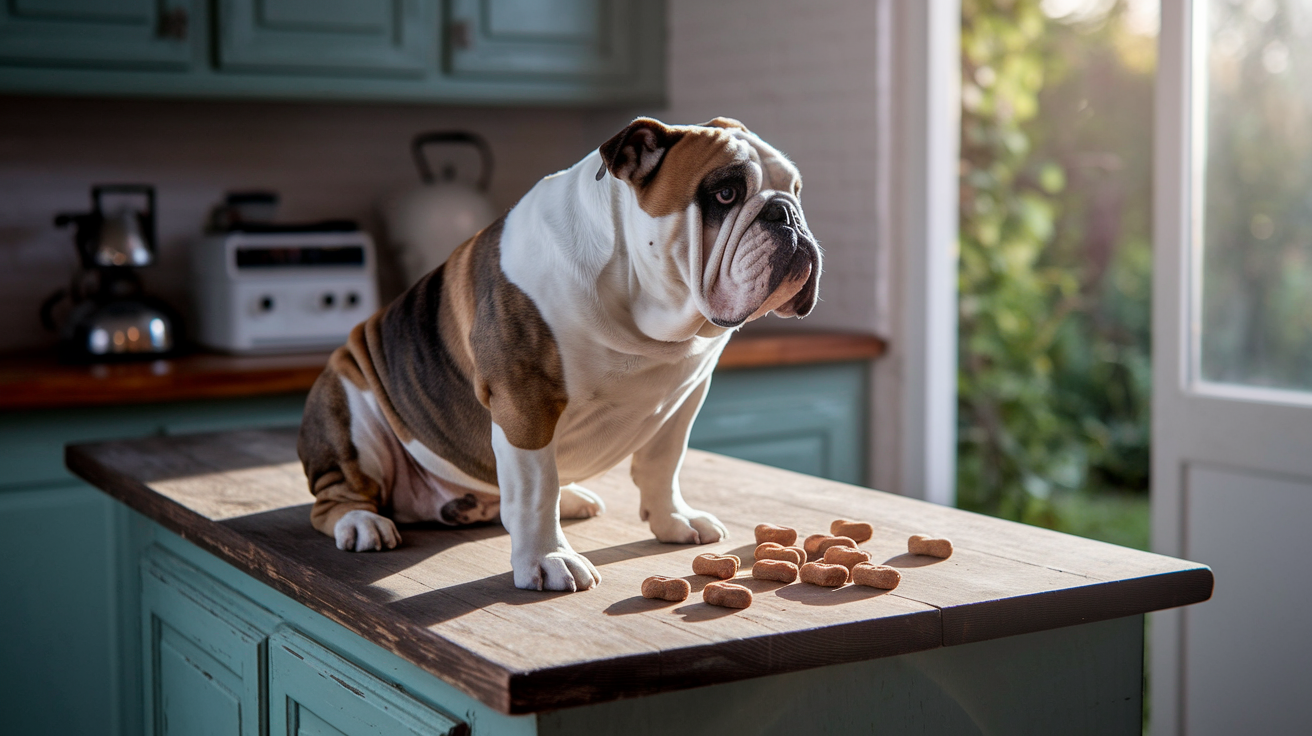
Think grain-free treats are always better for your bulldog?
Not so fast.
Most bulldogs don’t need grain-free unless your vet confirms a grain allergy or you see clear skin or gut problems.
Grain-free treats can raise other risks, like extra calories, legume-heavy formulas tied to heart concerns, and textures that may choke a flat-faced pup.
This post helps you decide when grain-free makes sense, which ingredients and calories to watch, and how to pick safe, dog-friendly treats that protect your bulldog’s tummy and heart.
Key Factors When Choosing Grain-Free Treats for Bulldogs
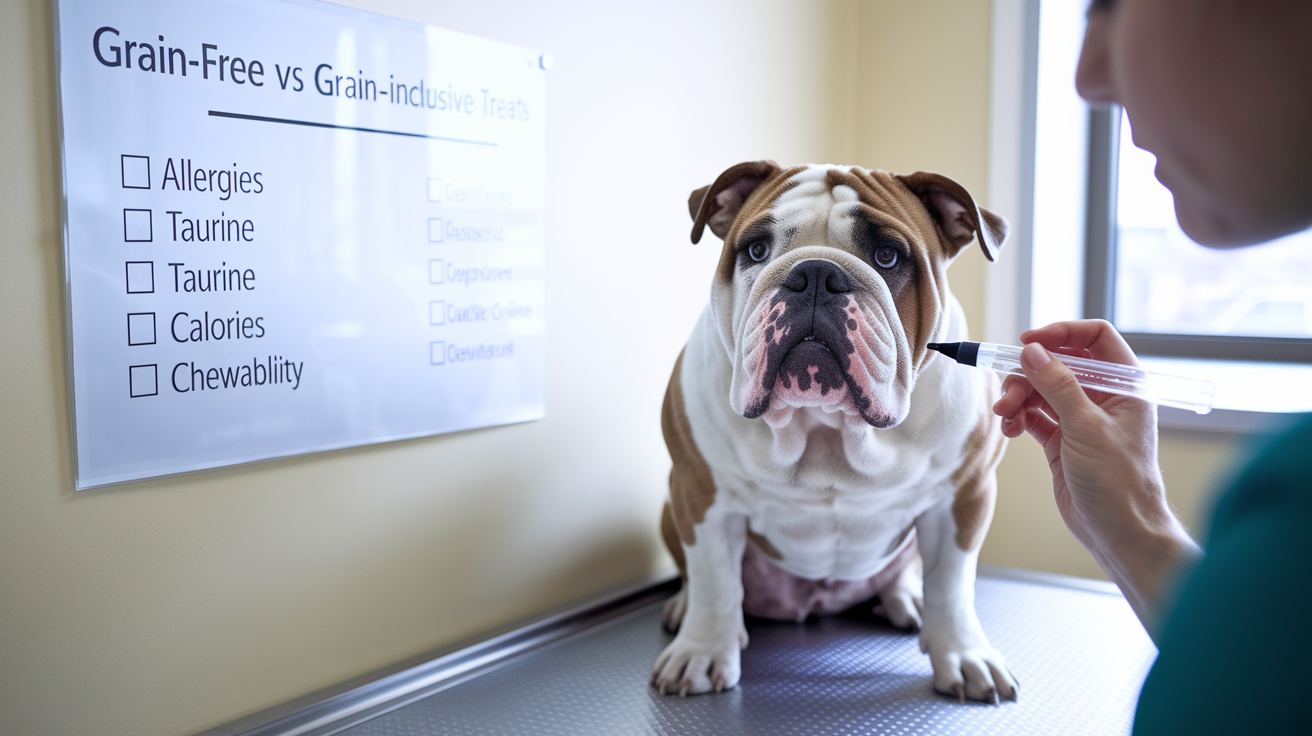
Here’s the thing: most bulldogs don’t need grain-free treats. Unless your vet has confirmed a grain allergy or you’re dealing with symptoms that point clearly to grain sensitivity, grain-inclusive treats are usually simpler, safer, and cheaper. Bulldogs handle grains just fine. Oatmeal, brown rice, barley? They bring fiber, B vitamins, and steady energy without packing in the calories the way a lot of grain-free substitutes do.
But if your bulldog’s scratching constantly, dealing with chronic ear infections, or having ongoing digestive trouble that you can trace back to food, then yes, grain-free might make sense. Same goes if you’re running an allergy trial with novel proteins or if your dog’s already on a grain-free main diet and you want to keep things consistent.
You’ve probably heard about the 2019 FDA thing. The alert linked certain grain-free diets to dilated cardiomyopathy (DCM), especially formulas loaded with peas, lentils, and chickpeas. That was mostly about full diets, not treats. Still, treats count. If your bulldog’s eating a grain-free kibble and you’re piling on legume-heavy treats, you’re stacking risk. Taurine is the amino acid your dog’s heart needs to function. If the grain-free formula doesn’t provide enough of it or the right building blocks, you’ve got a problem. Your treats shouldn’t create gaps or overload your dog on one ingredient.
Bulldogs come with their own set of issues. They get fat easily. Calorie control isn’t optional. A lot of grain-free treats lean on potatoes, peas, or tapioca, and those can run higher in calories and fat than whole grain versions. And because bulldogs have flat faces and compact mouths, the size and texture of the treat actually matters. You can’t just toss them anything.
What you need to ask yourself:
- Has a vet confirmed your bulldog has a grain allergy, or are you just guessing?
- Does the grain-free treat include taurine or the right amino acids to keep your dog’s heart healthy?
- How many calories are in each treat compared to grain-inclusive options, and will that fit your dog’s daily budget?
- Are the carb replacements (potatoes, legumes, tapioca) used in moderation, or do they dominate the ingredient list?
- Can your bulldog actually chew and swallow this treat safely given their short snout and airway?
- Has your vet signed off on the overall diet, treats included?
Bulldog Nutrition and Ingredient Comparisons Between Grain-Free and Grain-Inclusive Treats
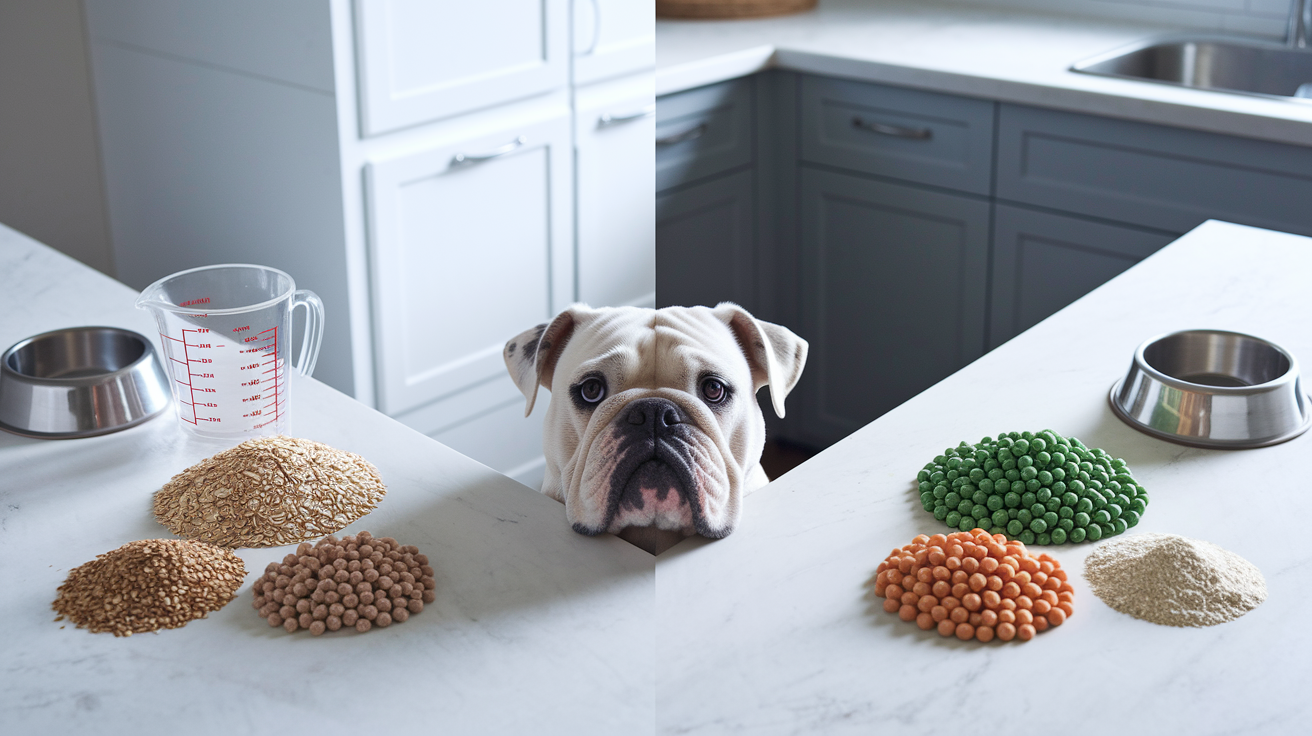
Bulldogs pack on weight without much effort. They do better on diets that give them steady energy without dumping extra calories. Whole grains like brown rice, oatmeal, and barley digest slowly, which helps keep blood sugar stable and energy consistent. They also act as prebiotics, feeding the good bacteria in your dog’s gut, and they bring B vitamins and minerals that support metabolism and coat health.
Grain-free treats swap those grains for sweet potatoes, white potatoes, peas, lentils, chickpeas, and tapioca. These can be nutritious, sure. But they often carry more calories and fat per serving. If your bulldog’s already prone to weight gain or you’re managing calories carefully, that difference adds up fast. Especially if you’re treating during training or throughout the day.
When you compare grain-free to grain-inclusive treats, you’re looking at trade-offs in nutrient density, digestibility, and filler quality. Grain-inclusive treats made with quality grains deliver fiber for digestion and bulk up the treat without adding empty calories. Grain-free treats can offer higher protein if meat or fish leads the ingredient list, which helps with muscle maintenance. But not all grain-free treats prioritize protein. Some lean heavily on potato starch or pea flour as cheap fillers, which inflate the carb count without bringing vitamins or minerals to the table. Low-quality grain-free options can leave your bulldog unsatisfied, which means you give more treats and accidentally jack up the calorie intake.
Ingredient quality beats the grain vs. grain-free debate every time. Potatoes and tapioca are easy to digest but don’t offer much nutritionally unless they’re paired with quality proteins and vegetables. Legumes like peas, lentils, and chickpeas do bring plant-based protein and fiber, but they’re part of the DCM discussion, and they can cause gas and bloating in some bulldogs. Tapioca starch shows up as a binder in grain-free treats but doesn’t do much beyond adding calories. When you’re checking out treats, ask yourself if the carb source is actually functional or just cheap filler padding out the formula.
| Ingredient Type | Bulldog Benefit | Bulldog Risk |
|---|---|---|
| Whole grains (oatmeal, brown rice, barley) | Lower calorie density, fiber for digestion, B vitamins, sustained energy, prebiotic support | Can trigger allergies in rare cases; must confirm grain is whole, not a low-value by-product |
| Potatoes and sweet potatoes | Easily digestible, good source of vitamins A and C when whole | Higher calorie and starch content; can contribute to weight gain if overused |
| Legumes (peas, lentils, chickpeas) | Provide plant-based protein and fiber; can support satiety | Linked to DCM concerns in high concentrations; may cause gas or bloating in sensitive bulldogs |
| Tapioca starch | Hypoallergenic binder; suitable for dogs with multiple sensitivities | Low nutritional value; adds calories without vitamins or minerals |
Identifying Bulldog Allergies and Sensitivities Before Switching to Grain-Free Treats
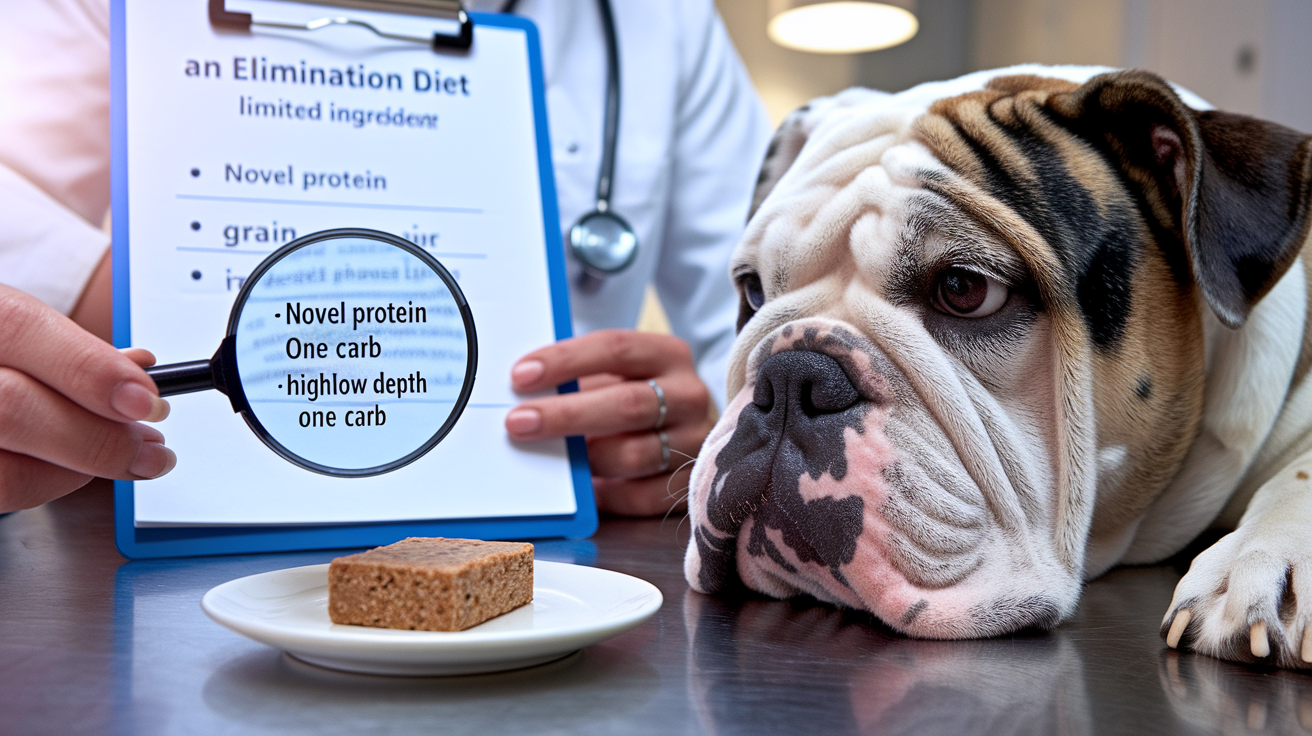
Most food allergies in bulldogs come from proteins, not grains. Chicken, beef, dairy, eggs. Those are the usual suspects. Grains rarely cause problems, but they can occasionally trigger reactions. Signs of a food allergy include itchy skin (face, ears, paws, belly), chronic ear infections, red or inflamed skin folds, excessive paw licking or chewing, soft stools, diarrhea, and sometimes vomiting or gas. If your bulldog’s showing these symptoms consistently and you’ve ruled out environmental stuff like pollen or dust, a food allergy trial might be worth it. Switching to grain-free treats without confirming an allergy wastes time and money while the real allergen stays in your dog’s diet.
The proper way to diagnose food allergies is through a vet-supervised elimination diet trial. For gut symptoms, two weeks might be enough to see improvement. For skin issues like dermatitis or chronic itching, you’re looking at eight to ten weeks to let the skin heal and inflammation settle. During the trial, your bulldog eats only a limited-ingredient diet with a novel protein (something your dog’s never had) and a single carb source. Everything else gets cut: treats, flavored medications, table scraps. After the trial, you reintroduce ingredients one at a time to see which ones trigger symptoms. It takes patience and discipline, but it’s the most reliable way to pinpoint allergens.
If your bulldog’s confirmed allergic to grains or you’re running an elimination trial, limited-ingredient grain-free treats make sense. Go for treats made with a single novel protein and one or two simple ingredients. Freeze-dried duck, salmon, or venison with sweet potato works. Skip treats with long ingredient lists, mixed proteins, or added flavorings. Those can reintroduce allergens and mess up your trial results. Once you know what’s safe, you can expand your treat options while avoiding the problem ingredients.
Evaluating Safety Issues in Grain-Free Bulldog Treats
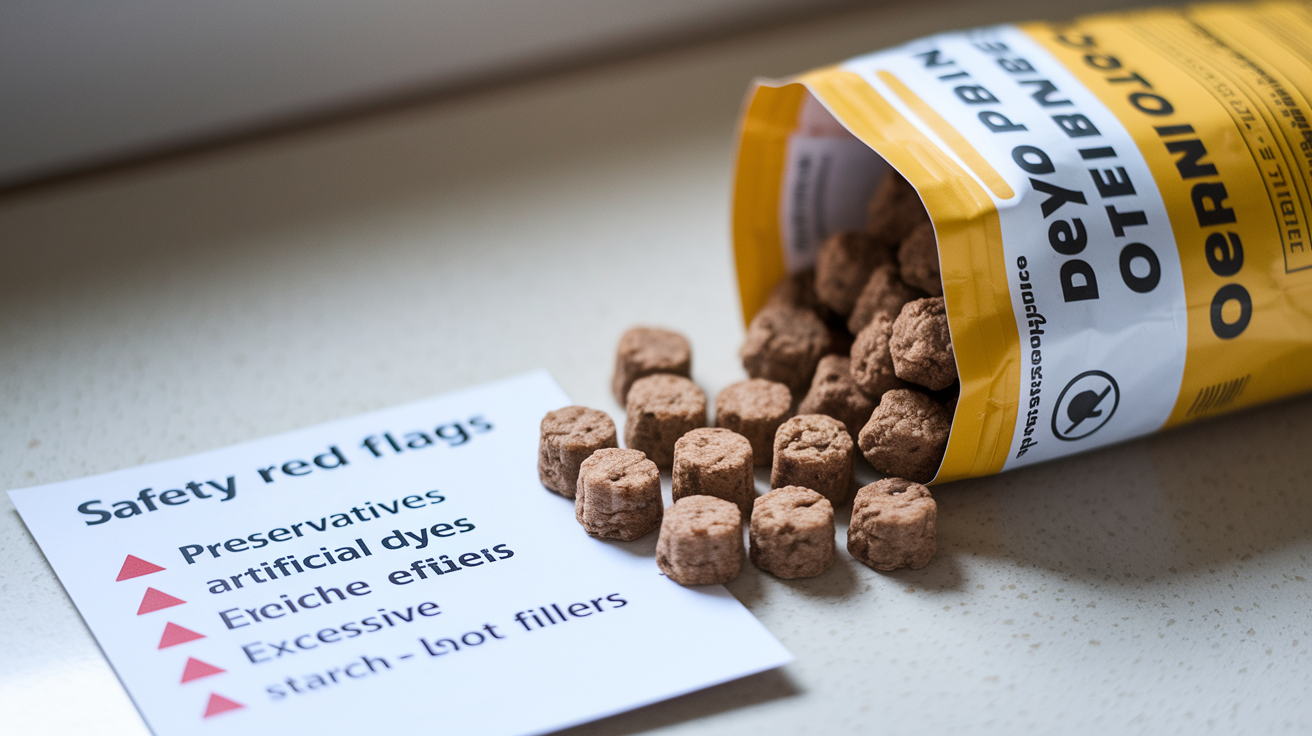
Bulldogs have flat faces, narrow airways, and compact mouths. Treat size and texture directly affect safety. Large, hard treats can choke them or require so much chewing that it strains the jaw and blocks the airway. Soft, bite-sized treats are safer and easier to manage. Grain-free treats come in all kinds of textures: crunchy biscuits, soft jerky, freeze-dried cubes. For bulldogs, go with soft or semi-soft options that break apart easily and can be swallowed without prolonged chewing. Training treats should be small enough to deliver quickly without breaking focus. Ideally no bigger than a pea or small blueberry.
Some grain-free treats contain artificial preservatives, dyes, and flavorings to extend shelf life or boost palatability. BHA, BHT, ethoxyquin, artificial colors like Red 40, Yellow 5, Blue 2. These have raised health concerns in long-term feeding studies and don’t bring any nutritional benefit. Low-quality grain-free treats might also rely on excessive starch fillers like potato flour or tapioca to bind the formula, which adds empty calories and reduces nutrient density. These fillers can make the treat harder or more crumbly, creating choking hazards for bulldogs. Read the ingredient list carefully. Prioritize whole-food ingredients with minimal processing.
Safety red flags:
- Treats bigger than a grape or cherry tomato that need extended chewing for a flat-faced dog.
- Artificial preservatives (BHA, BHT, ethoxyquin) or artificial dyes and colors.
- Vague protein terms like “meat meal,” “meat by-products,” or “animal digest” with no species listed.
- Excessive starch fillers (potato flour, tapioca starch) as primary ingredients instead of functional proteins or vegetables.
Understanding the Heart-Health (DCM) Discussion Around Grain-Free Bulldog Treats

In July 2019, the FDA put out an alert about a link between certain grain-free diets and dilated cardiomyopathy (DCM), a serious heart condition that weakens the heart muscle and can lead to heart failure. The alert came from case reports where dogs eating grain-free foods as their main diet developed DCM at higher than expected rates. In cases where a single primary diet was fed (no treats or table food), 90% involved grain-free formulas, and many were high in peas, lentils, chickpeas, and other legumes. The investigation’s still ongoing. Researchers are trying to figure out if it’s about specific ingredients, nutrient imbalances (low taurine or methionine), or something else in grain-free formulations. The alert focused on complete diets, not treats. But treats still contribute to your bulldog’s overall ingredient exposure and nutrient intake, so it matters.
Taurine is an amino acid that’s critical for heart muscle function. Dogs usually make it from other amino acids in their diet. But some grain-free diets might not provide enough precursors or might include ingredients that interfere with taurine absorption or production. If your bulldog’s main diet is grain-free and you’re adding more grain-free treats heavy on legumes, you’re compounding the risk. If your bulldog has any existing heart issues, a family history of heart disease, or is at higher risk, talk to your vet about DCM and taurine status before switching to grain-free treats. Your vet might recommend a cardiac screening, a taurine blood test, or dietary adjustments to protect your dog’s heart while you explore treat options.
Practical Buying Guide for Choosing Better Grain-Free Treats for Bulldogs
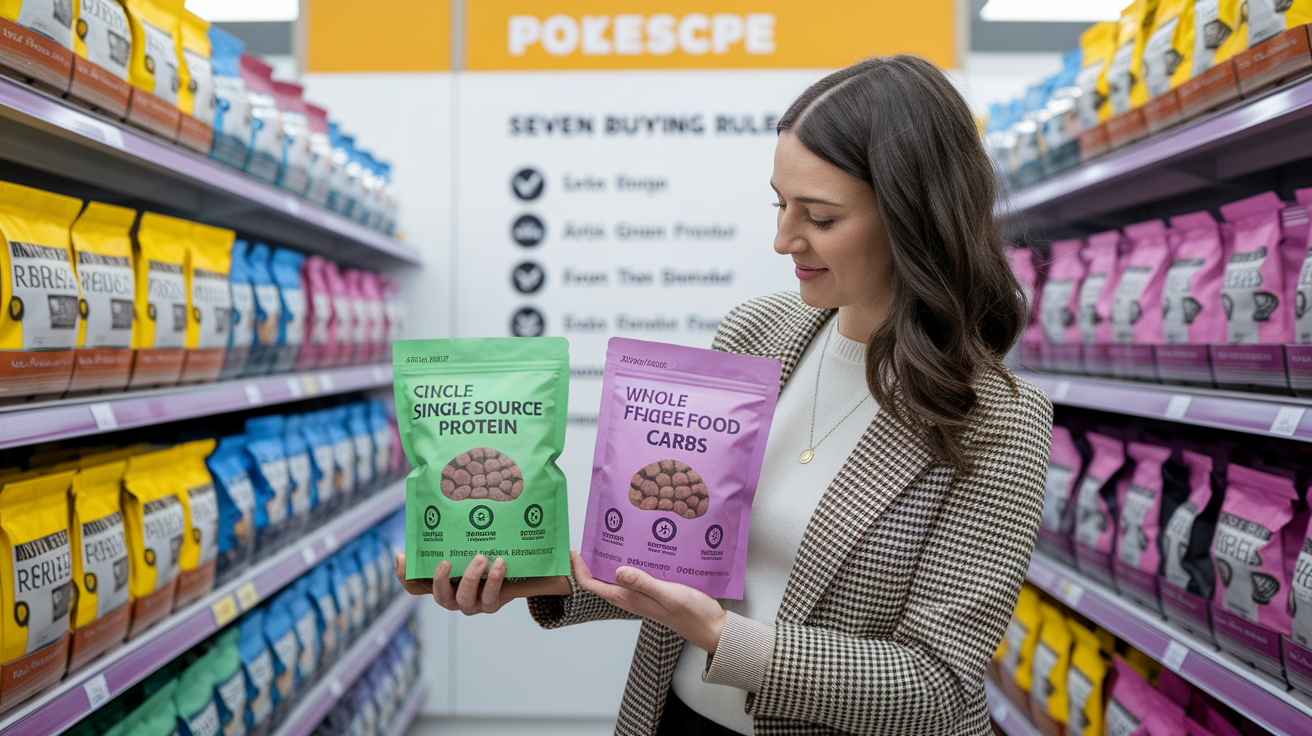
Start with the ingredient list, which is ordered by weight. The first few ingredients make up most of the treat, so those should be quality, identifiable proteins or whole vegetables. Look for named meat sources: “chicken,” “turkey,” “salmon,” “beef.” Not vague terms like “meat meal” or “animal by-products.” If sweet potato, pumpkin, or peas show up early, they should be whole ingredients, not flours or starches. Skip treats where the first ingredient is a starch filler like potato flour, tapioca starch, or pea protein isolate. Those offer little nutrition and inflate calories. Grain-free treats with short, simple ingredient lists are easier to evaluate and less likely to hide allergens or low-quality fillers.
Seven rules for buying grain-free treats for bulldogs:
- Choose treats with a named, single-source protein as the first ingredient (like “chicken breast” or “wild-caught salmon”).
- Go for whole-food carb sources like sweet potato, pumpkin, or blueberries over starches and flours.
- Skip artificial preservatives, dyes, and flavorings. Look for natural preservation like mixed tocopherols (vitamin E).
- Pick soft or semi-soft textures that work for flat-faced mouths and don’t pose choking risks.
- Check the calorie count per treat and make sure it fits your bulldog’s daily calorie budget.
- Confirm the treat’s made in a facility with clear sourcing and quality control (ideally USA, Canada, or EU with traceable ingredients).
- Talk to your vet before introducing grain-free treats if your bulldog has allergies, weight issues, or heart concerns.
Label Red Flags to Avoid
Marketing claims like “all-natural,” “holistic,” or “premium” aren’t regulated. They don’t guarantee quality. A treat can say “grain-free” and still have low-quality fillers, artificial additives, and vague protein sources. Some brands use ingredient splitting to make cheap fillers look less prominent. A treat might list “chicken” first, then “pea flour,” “pea protein,” “pea starch,” and “dried peas.” Combined, peas might outweigh the chicken. Watch for multiple forms of the same ingredient and think about their combined weight. Also, some grain-free treats market themselves as high-protein but get most of that protein from plant sources like pea protein isolate instead of animal meat, which is less appropriate for dogs. Go for treats where the protein comes from whole meat, fish, or eggs, and where carb sources are clearly identified and present in reasonable amounts.
Portion Control, Calories, and Weight Management for Bulldogs on Grain-Free Treats
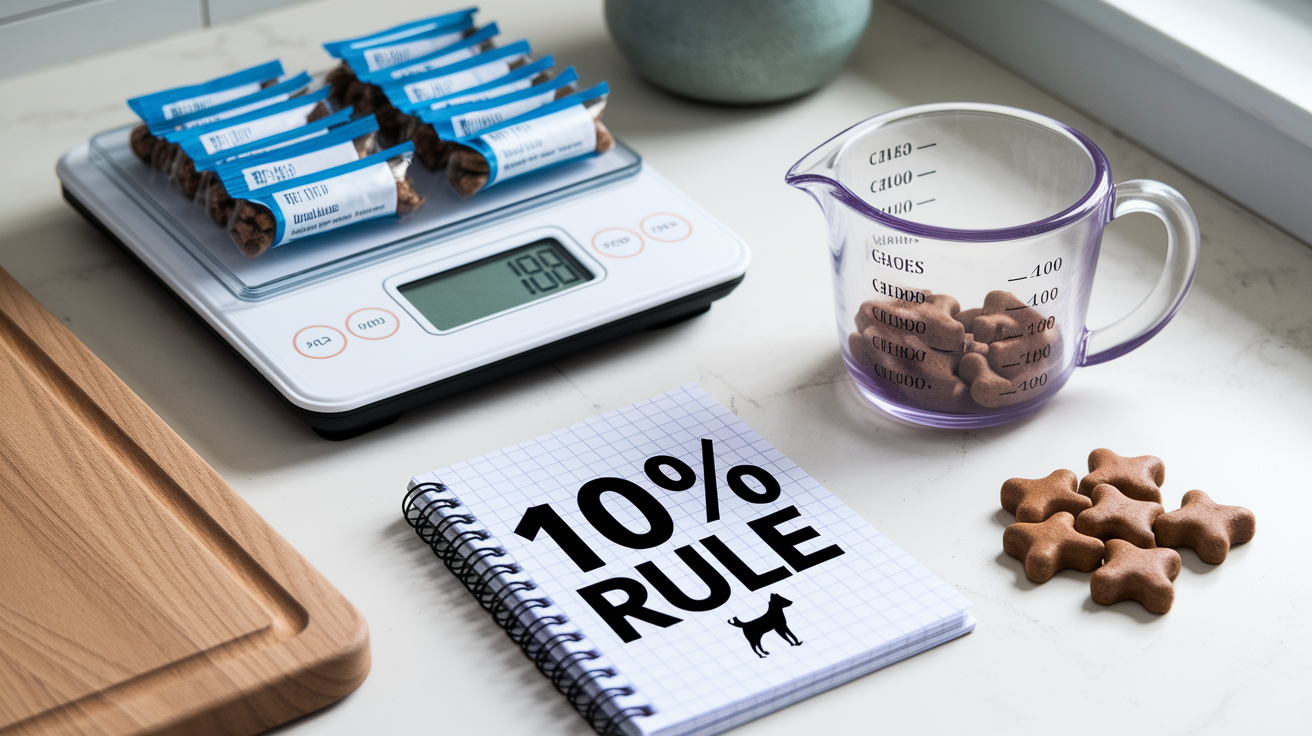
Treat calories should generally stay under 10% of your bulldog’s total daily calorie intake. That prevents weight gain and makes sure your dog’s main food provides complete nutrition. If your bulldog needs 800 calories a day, no more than 80 should come from treats. A lot of grain-free treats are calorie-dense because of higher fat from meat or added oils. Carb sources like potatoes and legumes can also pack more calories per gram than whole grains. Check the treat packaging for calorie info, sometimes listed as “calories per treat” or “calories per cup.” If it’s not listed, contact the manufacturer or estimate based on the guaranteed analysis and serving size.
Bulldogs get obese easily. Obesity stresses their joints, worsens breathing problems, and increases the risk of diabetes, heart disease, and a shorter lifespan. During training, it’s easy to give dozens of treats in a short time. If each treat has 10 to 15 calories, a 20-treat training session adds 200 to 300 calories. That’s nearly half of a small bulldog’s daily needs. To avoid overfeeding, choose low-calorie training treats (ideally 3 to 5 calories each) and break larger treats into smaller pieces. Freeze-dried meat treats and veggie-based bites like pumpkin or sweet potato are often lower in calories and easy to portion.
Monitor your bulldog’s weight weekly and adjust treat portions if you see weight gain. If your dog’s already overweight, work with your vet to create a calorie-controlled plan that includes treat allowances. Some owners set aside a portion of their dog’s daily kibble to use as training treats. That keeps calorie totals stable and cuts down on extra snacks.
| Bulldog Weight | Daily Calories (Estimate) | Max Treat Calories (10%) | Example Treat Count (5 cal/treat) |
|---|---|---|---|
| 30 lbs | ~750 calories | 75 calories | 15 treats |
| 40 lbs | ~950 calories | 95 calories | 19 treats |
| 50 lbs | ~1,100 calories | 110 calories | 22 treats |
| 60 lbs | ~1,250 calories | 125 calories | 25 treats |
Choosing the Right Grain-Free Treats for Bulldog Puppies and Seniors
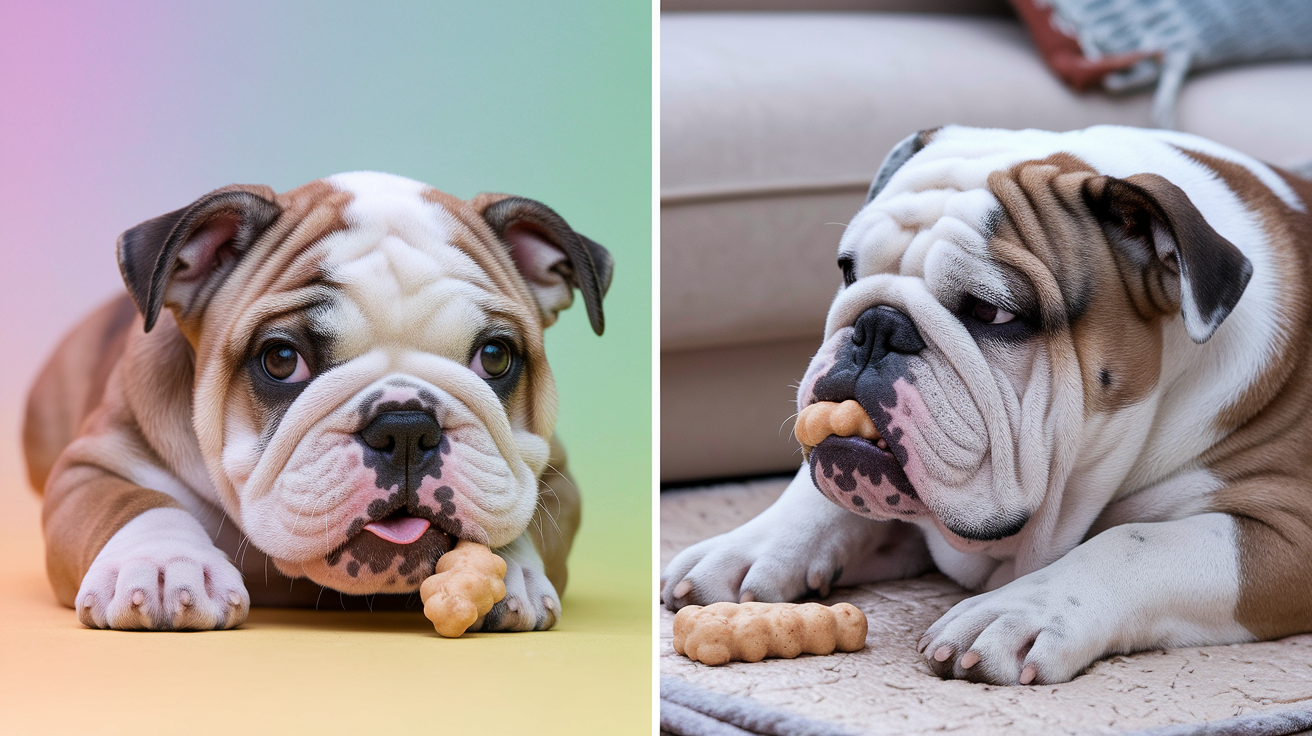
Bulldog puppies need small, soft treats that are easy to chew and swallow. Their teeth and jaws are still developing. Large or hard treats can cause choking or tooth damage. Training treats for puppies should be no bigger than a pea and soft enough to break apart with light pressure. Grain-free options like freeze-dried chicken or turkey, soft salmon bites, or small sweet potato cubes work well. Puppies need higher protein and fat to support growth, so choose treats with quality animal protein as the first ingredient. Skip treats with excessive calories or fillers. Puppies are still learning portion control and can easily overeat if treats are too rich or given too often.
Senior bulldogs often have dental issues, reduced jaw strength, and lower activity levels. They need softer treats and fewer calories. Many older bulldogs also face joint problems, so treats with added glucosamine or chondroitin can support mobility. Grain-free senior treats should prioritize easy digestibility, lower fat content, and functional ingredients like omega-3 fatty acids for inflammation or probiotics for digestive health. Soft jerky, pâté-style treats, or freeze-dried options that melt quickly in the mouth are ideal. Senior bulldogs might also have reduced appetite or become pickier, so palatability matters. High-protein, single-ingredient treats like freeze-dried fish or liver are often more appealing and easier to digest than complex formulas.
Age-specific treat considerations:
- Puppies: soft, pea-sized, high-protein, low-calorie, easy to chew, no choking hazards.
- Seniors: soft texture, lower fat, added joint support (glucosamine, omega-3s), easy to digest.
- Both: skip hard, large, or excessively crunchy treats that strain the jaw or pose choking risk.
- Both: go for single-ingredient or limited-ingredient grain-free treats to reduce allergen exposure.
- Both: portion carefully to prevent overfeeding and maintain healthy weight through all life stages.
Healthy Alternatives and Supplement-Style Grain-Free Treats for Bulldogs
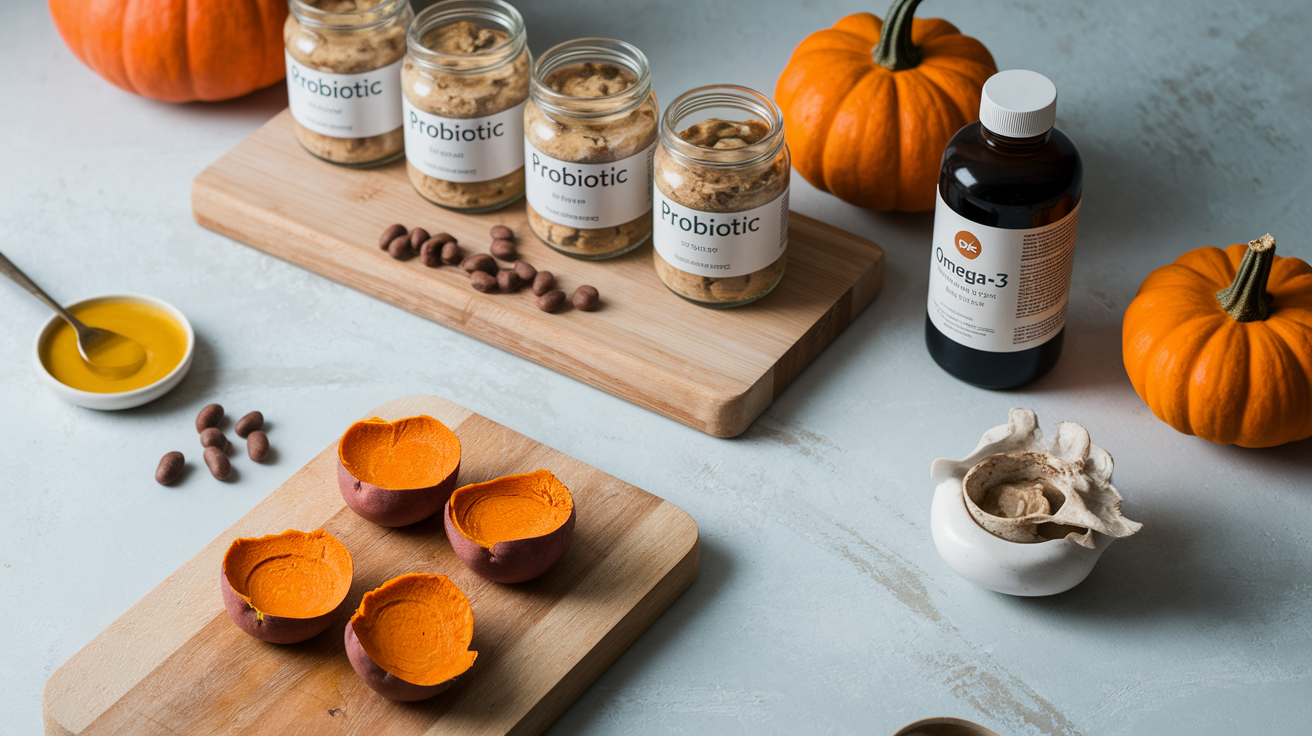
Probiotic-infused treats can support digestive health by delivering beneficial bacteria that aid nutrient absorption and reduce gas, bloating, and stool irregularities. Bulldogs often have digestive sensitivity. Probiotics help maintain a balanced gut microbiome, especially during diet transitions or after antibiotic treatments. Omega-3 fatty acid treats, often made with fish like salmon or sardines, support skin and coat health and reduce inflammation. That’s helpful for bulldogs prone to skin fold dermatitis and joint issues. Pumpkin-based treats provide natural fiber and can help regulate digestion, reduce flatulence, and support weight management by adding bulk without excess calories. These functional treats do more than just reward or reinforce training.
Homemade grain-free treats give you complete control over ingredients and portion sizes. Simple recipes using single ingredients like baked sweet potato slices, frozen blueberries, or dehydrated chicken breast are easy to make and cost-effective. For digestive support, blend cooked pumpkin with a bit of coconut flour and bake into small bites. For high-protein training treats, poach chicken breast and cut it into pea-sized pieces, then freeze in single-serving portions. Homemade treats eliminate preservatives, artificial additives, and mystery fillers. You can tailor recipes to your bulldog’s specific needs: low-calorie, high-fiber, or novel-protein formulations.
Alternative grain-free treat options:
- Single-ingredient freeze-dried meats (chicken, turkey, salmon, beef liver) for training and high-value rewards.
- Veggie-based low-calorie treats like dehydrated sweet potato, pumpkin bites, or frozen green beans for weight control.
- Probiotic or prebiotic treats to support digestion and reduce gas, especially helpful for bulldogs with sensitive stomachs.
- Omega-3 treats (fish-based or algae-based) to reduce skin inflammation and support joint health in seniors or overweight bulldogs.
Monitoring Bulldog Health After Introducing Grain-Free Treats

After introducing grain-free treats, monitor your bulldog’s stool quality daily. Healthy stools should be firm, well-formed, and easy to pick up. Loose stools, diarrhea, excessive gas, or straining can indicate the new treats are too rich, contain an allergen, or include ingredients your dog’s digestive system can’t handle. Gut reactions often show up within the first two weeks of a diet change. That’s your critical observation window. If digestive issues persist beyond a few days, stop the treats and talk to your vet. Keep a simple log of what treats you give, how many, and any changes in stool or behavior. That helps you identify patterns.
Weight changes happen fast in bulldogs, especially if new treats are calorie-dense or given frequently. Weigh your bulldog weekly at the same time of day, ideally in the morning before feeding. A gain of more than one to two pounds in a month might signal overfeeding. Reduce treat portions or switch to lower-calorie options. Skin and coat condition also provides clues. If your bulldog develops new itching, redness, hot spots, or excessive shedding after starting grain-free treats, an ingredient in the treat might be triggering a sensitivity. Eliminate the treat, wait for symptoms to clear, and reintroduce cautiously or choose an alternative formula.
Signs to monitor after introducing grain-free treats:
- Stool consistency and frequency: watch for loose stools, diarrhea, straining, or excessive gas.
- Weight: track weekly. Look for sudden gains or losses beyond normal fluctuation.
- Skin and coat: check for new itching, redness, flaking, hot spots, or changes in coat texture or shedding.
- Energy and behavior: note any lethargy, hyperactivity, or changes in appetite or water intake that coincide with the new treats.
Final Words
In the action: you’ve now got clear guidance on when grain-free treats make sense, usually only for confirmed allergies, and what to watch for like DCM context, taurine, calories, textures, and label red flags.
We covered nutrition trade-offs, elimination trials, safe sizes and softer textures for flat-faced mouths, buying rules, portion control, age tips, and how to monitor reactions.
Keep grain free treat considerations for bulldogs practical and vet-guided, and enjoy reward time that builds good habits and connection.
FAQ
Q: Should bulldogs eat grain-free food?
A: Bulldogs should eat grain-free food only if a vet confirms or strongly suspects a grain allergy; otherwise grain-inclusive options usually provide helpful fiber, B vitamins, and steady energy for most bulldogs.
Q: Why don’t vets recommend grain-free dog food?
A: Vets don’t recommend grain-free dog food because research tied some legume-heavy grain-free diets to a heart condition (DCM); grains typically supply safe nutrients, fiber, and steady energy for most dogs.
Q: What is the 90 10 rule for dogs?
A: The 90 10 rule for dogs means roughly 90% of daily calories should come from a complete diet and no more than 10% from treats, helping prevent weight gain and keep nutrition balanced.
Q: Are grain-free dog treats better for dogs?
A: Grain-free dog treats are not automatically better; they’re useful only for dogs with confirmed grain allergies. Most dogs do fine with grain-inclusive treats that offer fiber, B vitamins, and often lower calorie density.