
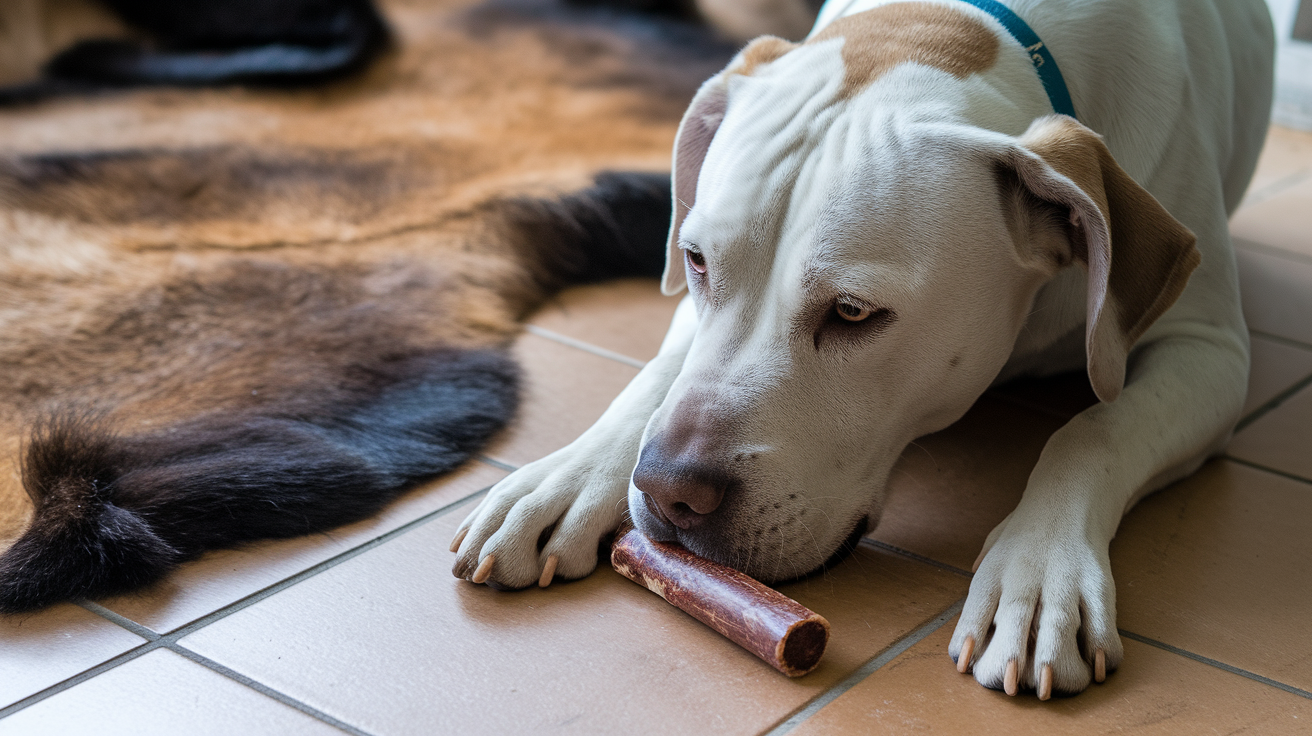
Tired of dental chews that your Rottweiler ruins in five minutes?
Big, strong-jawed dogs need chews that do two things: actually scrub plaque and stand up to powerful bites.
In this post we’ll cut to the chase and show heavy-duty dental chew options that actually last, like monster bully sticks, beef cheek strips, camel skin, and gullet sticks, plus how to match size and hardness to your dog’s jaw and simple safety checks.
Read on to make chew time cleaner, longer, and safer.
Best Heavy-Duty Dental Chew Choices for Strong-Jawed Large Breeds

For Pit Bulls, Rottweilers, and German Shepherds, you’re looking at thick beef-based options that won’t turn into sawdust the second your dog gets serious. Monster bully sticks sit at the top, often hitting 12 inches and buying you actual hours of peace even when your dog’s jaw strength could obliterate a grocery store chew before you’ve poured your first cup of coffee. Beef cheek strips bring dense, fibrous resistance without the smell that makes you regret life choices, so they work indoors without clearing the room. Camel skin treats are tough and leathery, pushing your dog toward slow gnawing instead of that aggressive bite-and-destroy approach. Gullet sticks (made from beef esophagus) land on the softer side but come loaded with chondroitin, so you’re supporting joint health while your dog works through it.
Durability matters because strong-jawed breeds can shred a standard chew faster than you’d think possible. The scraping action during chewing tackles plaque and tartar, but only if the chew actually lasts long enough for your dog to work through it properly. Natural single-ingredient stuff digests way more safely than rawhide, which can cause blockages in sensitive dogs and doesn’t break down predictably once it’s swallowed. For these breeds, you need durability and digestibility working together. A chew that lasts but also passes through without drama.
Safety comes down to matching thickness to mouth size and jaw strength. Too small becomes a choking hazard the instant your dog gets a grip. Too soft gets demolished before doing anything useful for their teeth. You want controlled wear, where the chew breaks down gradually through steady gnawing rather than splintering into chunks that get swallowed whole.
Monster bully sticks: 100% beef muscle, up to 12 inches long, top durability for natural chews, give sustained dental friction
Beef cheek strips: dense fibrous texture, low odor, resist quick breakdown, breeders recommend them for balancing toughness with ingredients you can actually recognize
Camel skin treats: very tough and leathery, novel protein if your dog reacts to beef or chicken, encourage slow methodical chewing
Standard bully sticks: firm texture and strong flavor, reliable middle ground for moderate to strong chewers
Gullet sticks: softer than bully sticks but tougher than soft treats, rich in chondroitin for joint support, good for daily chew sessions
Material and Format Comparison for Strong Chewers
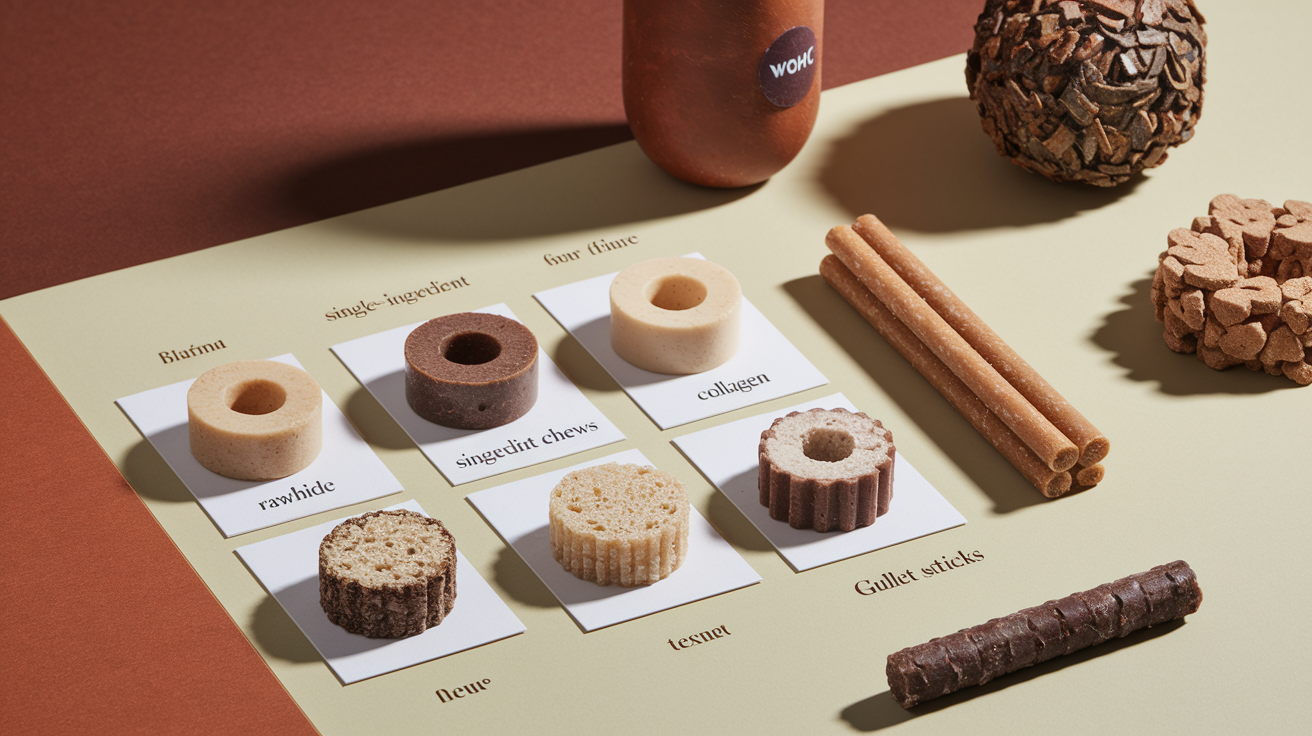
Natural beef-based chews digest more predictably than rawhide because they’re made from single-ingredient muscle, skin, or organ tissue that breaks down in stomach acid. No binding agents or chemical residues like you get with processed rawhide. Collagen chews, sourced from the inner layer of beef hide, soften during chewing and move through the digestive tract more easily than traditional rawhide, which can swell and form blockages in some dogs. Edible dental sticks with VOHC approval offer verified plaque and tartar reduction, but they’re formulated to break down quickly. They’re not built for the hours-long sessions heavy chewers need.
Digestibility differences become critical for large strong-jawed breeds because these dogs can consume a full chew in one sitting. Bully sticks wear down gradually through mechanical friction, releasing small digestible pieces as the dog works. Beef cheek and esophagus-based chews follow a similar pattern but vary in texture density. Cheek is tougher and more fibrous, while esophagus softens faster. Hard cheese chews made from aged yak or cow milk are extremely firm and long-lasting, but their rock-hard initial texture can fracture teeth if a dog bites down aggressively rather than gnawing patiently. Rawhide alternatives like collagen and cheek strips deliver the same extended chewing experience without the blockage risk that makes rawhide a concern for sensitive stomachs.
Dental benefits come from the scraping action during chewing, not from the chew itself. Bully sticks and beef cheek strips create friction against tooth enamel and gum lines, helping reduce plaque buildup mechanically. Edible dental sticks are softer and include textures or ridges designed to reach between teeth, but they don’t last long enough to satisfy an aggressive chewer’s need for sustained engagement. For strong-jawed breeds, the best dental outcome comes from chews that balance hardness with controlled breakdown. Firm enough to require effort, soft enough to avoid cracking teeth, and digestible enough to pass safely.
| Material/Format | Durability | Digestibility | Dental Benefit | Safety Notes |
|---|---|---|---|---|
| Monster bully sticks (beef muscle) | Hours; longest-lasting natural option | High; breaks down in stomach acid | Strong mechanical friction, sustained plaque scraping | Discard small nubs; supervise to prevent choking |
| Beef cheek strips | High; dense fibrous texture resists quick breakdown | High; single-ingredient, predictable digestion | Gentle friction, effective for daily plaque control | Low odor; match size to dog’s mouth |
| Collagen chews (inner beef hide) | Moderate to high; softens during chewing | Very high; easier to digest than rawhide | Moderate friction; designed for joint/skin support as well | Avoid ultra-hard varieties; monitor for sharp edges |
| Gullet sticks (beef esophagus) | Moderate; softer than bully sticks | High; rich in chondroitin, easy to digest | Moderate friction; good for transitional chewers | Rotate with firmer options for dental variety |
| Hard cheese chews (yak/cow milk) | Very high; extremely slow to soften | Moderate; can cause digestive upset in some dogs | High friction but risk of tooth damage if bitten aggressively | Supervise closely; not for aggressive biters, better for patient gnawers |
| Edible dental sticks (VOHC-approved) | Low; designed for daily consumption | Very high; formulated to break down quickly | Verified plaque/tartar reduction; textured for tooth contact | Not for heavy chewers; use as daily supplement, not main chew |
Size and Hardness Guide for Dental Chews Built for Strong-Jawed Breeds
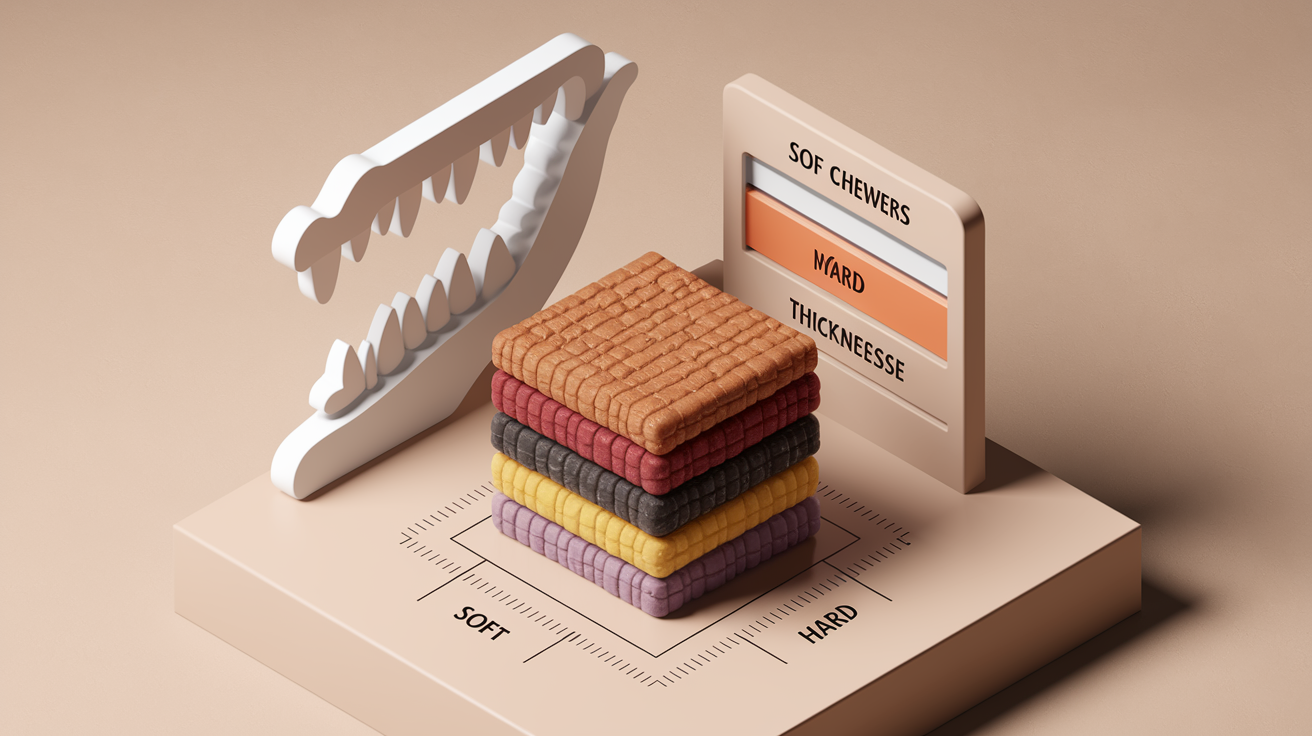
Large breeds over 60 pounds need thicker, larger-format chews that can’t be swallowed whole. You want enough surface area for sustained gnawing. A chew should always be bigger than your dog’s mouth, and for Rottweilers or German Shepherds, that means looking for products labeled for large or extra-large dogs. Don’t settle for medium sizes that might work for a Beagle but become a choking risk in a powerful jaw. Thickness matters as much as length. A thin bully stick might be 10 inches long but still get consumed in minutes by a determined chewer, while a thicker cut of the same length can extend the session to an hour or more.
Hardness is about finding the middle ground. Too soft gets destroyed before delivering any dental benefit. Too hard and rock-solid can fracture a tooth if your dog bites down instead of gnawing. The best heavy-duty chews start firm and gradually soften as the dog works through them. That’s why natural options like bully sticks and beef cheek tend to outperform synthetic materials that stay rigid the entire time.
Hardness Levels Explained
Soft chews are designed for puppies, seniors, and dogs with sensitive teeth. They soothe gums and are easy to break down, but they won’t last more than a few minutes with a strong-jawed adult dog. Medium hardness covers most adult chews and balances resistance with safety. Firm enough to require effort, soft enough to avoid cracking teeth. Hard chews are built for experienced strong chewers, but they should still give a little with saliva and sustained pressure. If a chew feels like biting a rock, it’s too hard and puts teeth at risk.
Always choose chews larger than your dog’s mouth to prevent choking.
Match chew thickness to jaw strength. Thicker cuts for stronger chewers.
Select chews that soften gradually with saliva, not materials that stay rock-hard throughout the session.
Monitor the chew session and remove the chew when it becomes small enough to swallow whole.
Safety and Replacement Timing for Aggressive Chewers

Supervision isn’t optional when you hand a strong-jawed dog a new chew, especially if it’s the first time you’re using that product or format. Watch how your dog approaches it. Some dogs gnaw methodically, others bite down hard and try to crack it immediately. If your dog is an aggressive biter rather than a patient chewer, avoid ultra-hard materials like cooked bones, antlers, or any chew marketed as “indestructible.” Those are the ones most likely to fracture a tooth. Natural chews that provide resistance but soften over time are safer for dogs who attack their chews with enthusiasm.
Wear patterns tell you when a chew is nearing the end of its safe life. Small sharp edges, cracks, or splintering mean it’s time to discard the chew even if there’s still material left. Once a chew gets small enough that your dog could fit the entire piece in their mouth, it’s a choking hazard and needs to be thrown out. Some owners try to save the last few inches by holding it for the dog or using a chew holder, but if you’re not actively supervising, it’s safer to toss it and start fresh next time.
Rotation helps both safety and engagement. Giving your dog the same chew type every day increases the chance they’ll get bored or develop a repetitive chewing pattern that wears teeth unevenly. Rotating between bully sticks, beef cheek, and gullet sticks keeps interest high and spreads the mechanical wear across different chewing angles and textures.
Supervise every chew session, especially when introducing a new product or format.
Discard the chew immediately if it develops cracks, sharp edges, or splinters.
Remove and throw out any chew that becomes small enough to fit entirely in your dog’s mouth.
Avoid ultra-hard materials like cooked bones or non-edible synthetic products marketed as indestructible.
Rotate chew types weekly to maintain interest and reduce repetitive wear on teeth.
Monitor your dog’s chewing style. If they bite aggressively rather than gnaw, choose softer materials that still provide resistance.
Breed-Specific Dental Chew Tips for Pit Bulls, Rottweilers, and German Shepherds
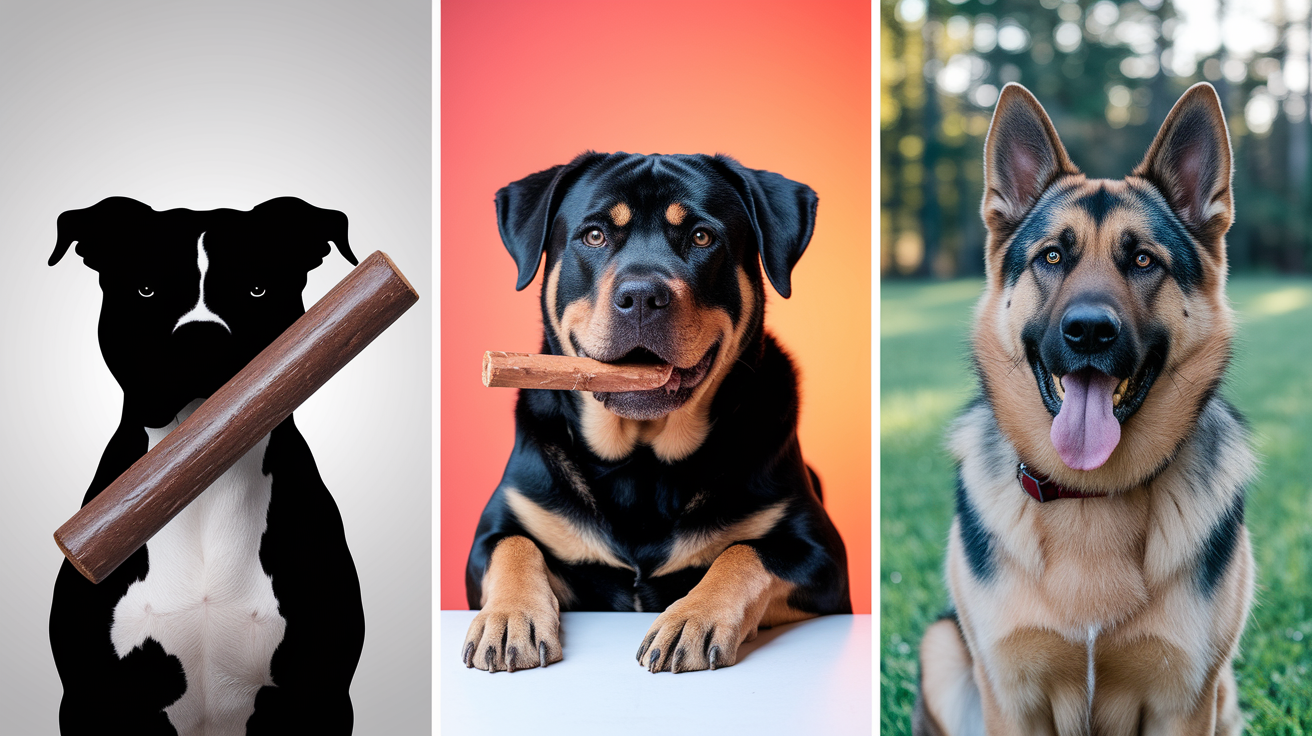
Pit Bulls have compact, muscular jaws that generate tremendous bite force in a short skull structure. They need chews that are thick enough to resist being crushed but not so hard that they crack teeth when the dog clamps down. Monster bully sticks and beef cheek strips work well because they offer dense resistance without the brittleness of bones or antlers. A 10 to 12-inch bully stick gives a Pit Bull enough length to work through methodically, and choosing the thickest available cut extends the session and delivers better value.
Rottweilers have larger mouths and heavy heads, so they need chews with both length and girth to match their size. A standard bully stick might disappear in 20 minutes, but a beef cheek roll or extra-thick collagen stick can keep a Rottweiler occupied for an hour or more. Camel skin treats are another strong option for this breed because the leathery texture encourages slow, sustained gnawing rather than quick consumption. The novel protein is useful if your Rottweiler has shown sensitivities to common beef or chicken ingredients.
German Shepherds tend to be methodical chewers who enjoy working through a chew over time rather than devouring it in one sitting. Gullet sticks rich in chondroitin support the joint health that’s particularly important for this breed, and rotating between gullet, bully, and cheek options keeps their interest high while delivering varied textures and nutritional profiles.
Pit Bulls: Monster bully sticks (12-inch, extra-thick cuts) for extended sessions; beef cheek strips for dense resistance without brittleness
Pit Bulls: Collagen chews that soften gradually to match aggressive bite style; avoid ultra-hard cheese or antler products
Rottweilers: Beef cheek rolls for size and girth appropriate to large mouths; camel skin treats for novel protein and slow gnawing
Rottweilers: Extra-thick collagen sticks for extended durability; rotate with bully sticks to maintain engagement
German Shepherds: Gullet sticks for chondroitin-rich joint support; methodical chewing style suits moderate-density chews
German Shepherds: Rotate bully, gullet, and cheek options weekly for varied texture and sustained interest
Dental Chew Options for Puppies and Seniors in Strong-Jawed Large Breeds
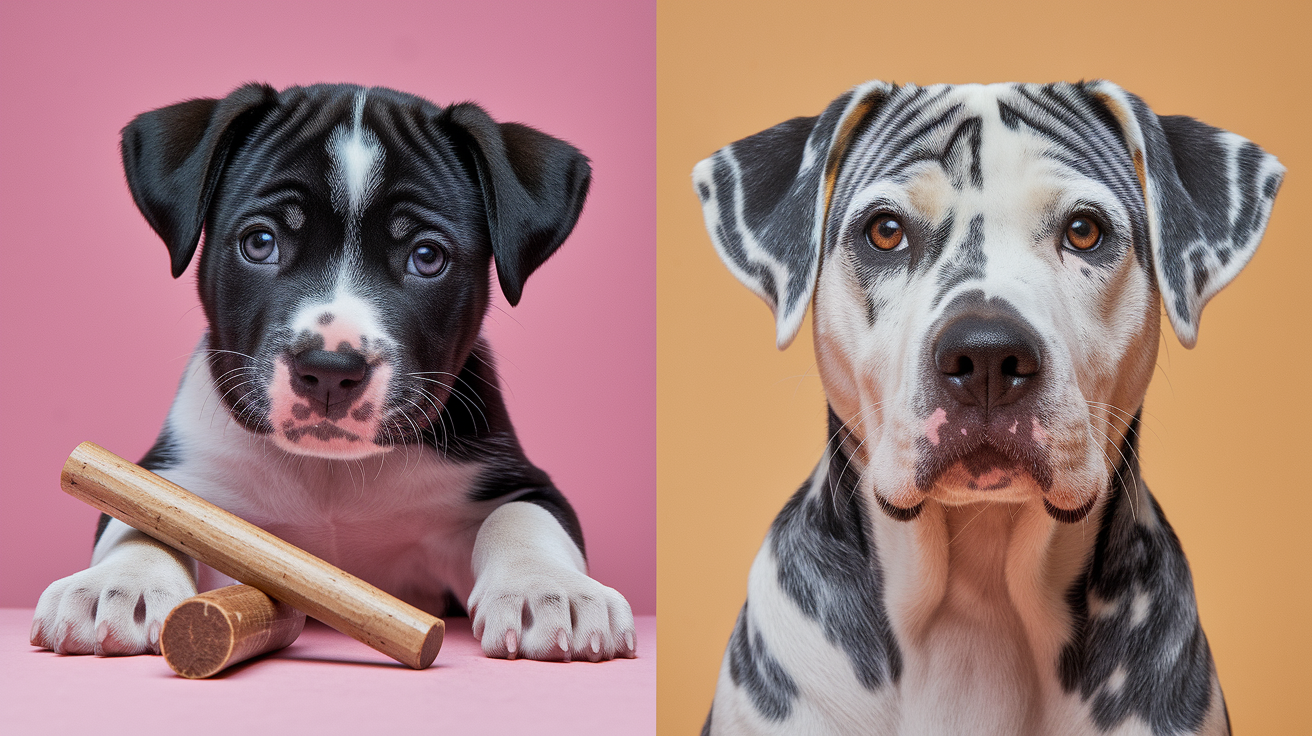
Puppies between 3 and 6 months are in the most intense teething window, and their developing teeth and jaws need chews that soothe gums without risking fractures. Soft to medium hardness is the right range. Think gullet sticks or thin bully sticks rather than the monster cuts you’d give an adult. Even a large-breed puppy doesn’t yet have the jaw strength of an adult Rottweiler, so starting with moderate textures helps them learn how to chew properly without damaging emerging adult teeth. Yak cheese and other extra-hard chews should be avoided entirely during the teething phase because aggressive biting on rock-hard surfaces can crack teeth before they’ve fully hardened.
Seniors in strong-jawed breeds often develop tooth sensitivity, gum recession, or arthritis that makes prolonged chewing uncomfortable. Softer chews like collagen sticks or dehydrated sweet potato slices give them something to work on without the strain of a dense bully stick. If your senior dog used to love beef cheek rolls but now leaves them half-finished, it’s a sign that their teeth or jaw may need a gentler option. You can also soak firmer chews in warm water for a few minutes to soften the exterior before offering them.
Puppies (3 to 6 months): Gullet sticks for moderate texture and chondroitin support during rapid growth
Puppies (6 to 12 months): Thin or standard bully sticks as jaw strength develops; avoid monster cuts until adulthood
Puppies (teething phase): Avoid yak cheese, antlers, and other ultra-hard materials that risk tooth fractures
Seniors: Collagen chews that soften easily with saliva; easier on sensitive teeth and gums
Seniors: Dehydrated sweet potato slices for low-protein, high-fiber chewing that’s gentle on aging jaws
Nutritional and Digestibility Guidance for Large-Breed Dental Chews
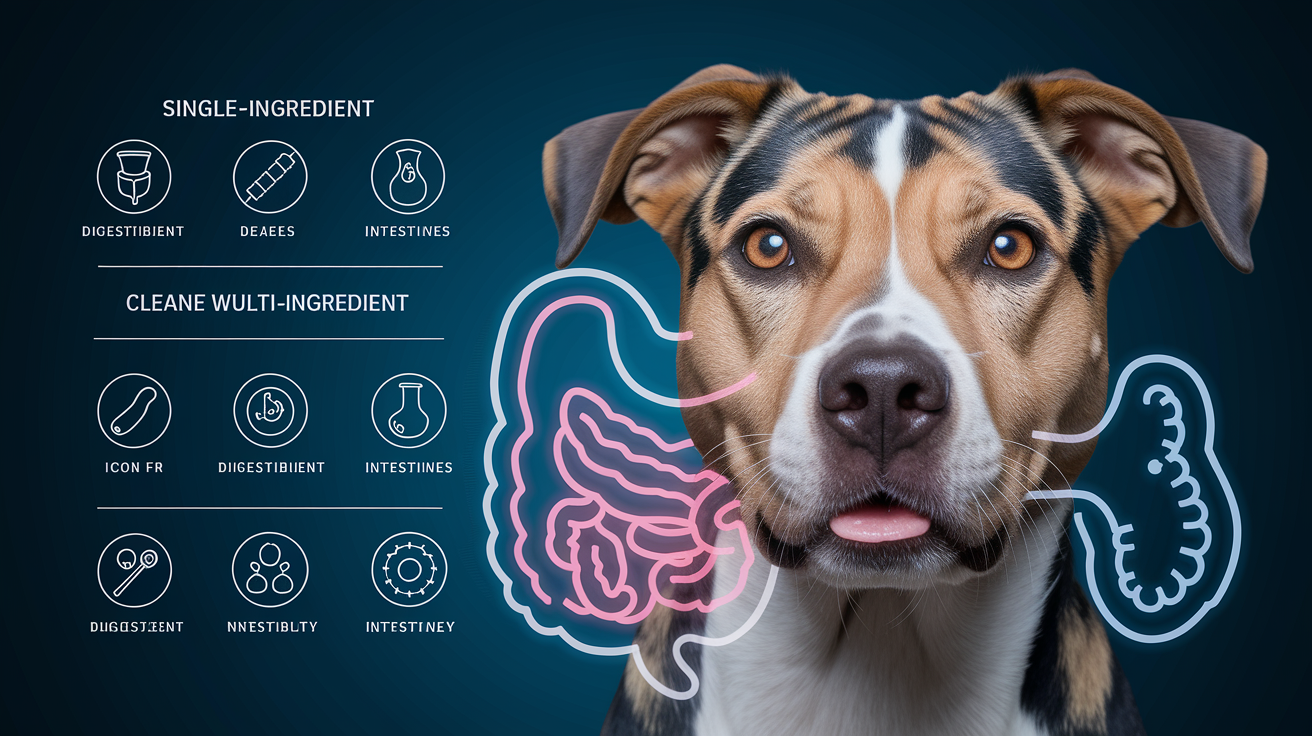
Single-ingredient chews digest more predictably than multi-ingredient products held together with binders or fillers. That’s why beef muscle, cheek, and esophagus options are easier on the stomach than traditional rawhide. Rawhide can swell in the digestive tract and form blockages, especially in dogs who gulp large pieces rather than chewing thoroughly. Natural beef chews break down in stomach acid and pass through the system without the same swelling risk, and collagen-based products are specifically processed to be more digestible than the outer hide layers used in rawhide.
Calorie counts vary widely depending on chew type and size. A 12-inch monster bully stick can contain 150 to 200 calories, which is a meaningful portion of a large dog’s daily intake and should be factored into meal planning. If you’re using dental chews daily, consider reducing kibble portions slightly to avoid overfeeding, especially for less active dogs or seniors with slower metabolisms. Hard cheese chews are calorie-dense and can cause digestive upset if introduced too quickly, so start with short supervised sessions and watch for loose stools or discomfort.
Ingredient safety is about knowing what you’re giving and where it comes from. Look for chews sourced from single-ingredient, recognizable animal parts. Beef muscle, beef cheek, beef esophagus, camel skin. Avoid products with chemical binders, artificial preservatives, or vague “meat by-product” listings. High-ash content in some poorly processed chews can stress kidneys over time, so prioritize clean, minimally processed options from manufacturers who list sourcing and processing details.
Choose single-ingredient chews with clear sourcing (e.g., “100% beef muscle” or “beef esophagus”).
Avoid chemical binders, artificial preservatives, and vague ingredient labels like “meat by-product”.
Account for chew calories in daily feeding totals; a large bully stick can represent 10 to 15% of a big dog’s daily intake.
Introduce new chew types gradually and monitor for digestive upset, especially with high-fat or dense-protein options.
Cost, Value, and Bulk Buying Tips for Large-Breed Dental Chews

Durability directly impacts value, because a chew that lasts two hours costs less per session than a chew that disappears in 20 minutes. Monster bully sticks and beef cheek rolls often carry higher up-front prices than standard bully sticks, but the extended chew time makes them more economical for heavy chewers. Calculate cost per chewing hour rather than cost per chew to get a clearer picture of which options deliver the best return.
Bulk buying makes sense for large-breed owners who go through chews quickly, but only if you have proper storage. Natural chews can develop mold or attract pests if stored in humid conditions, so keep bulk orders in airtight containers in a cool, dry space. Subscription services for dog chews can offer convenience and slight discounts, but check the flexibility. If your dog suddenly decides they don’t like a certain chew type, you don’t want to be locked into monthly deliveries of something they won’t touch.
Compare cost per chewing hour, not just cost per chew, to evaluate true value.
Buy in bulk only if you have airtight, cool, dry storage to prevent spoilage.
Consider subscription services for convenience but confirm you can skip or adjust shipments.
Start with single-unit purchases when trying a new chew type to confirm your dog will use it before committing to bulk orders.
Multi-Benefit Chews: Joint, Skin, and Behavioral Support
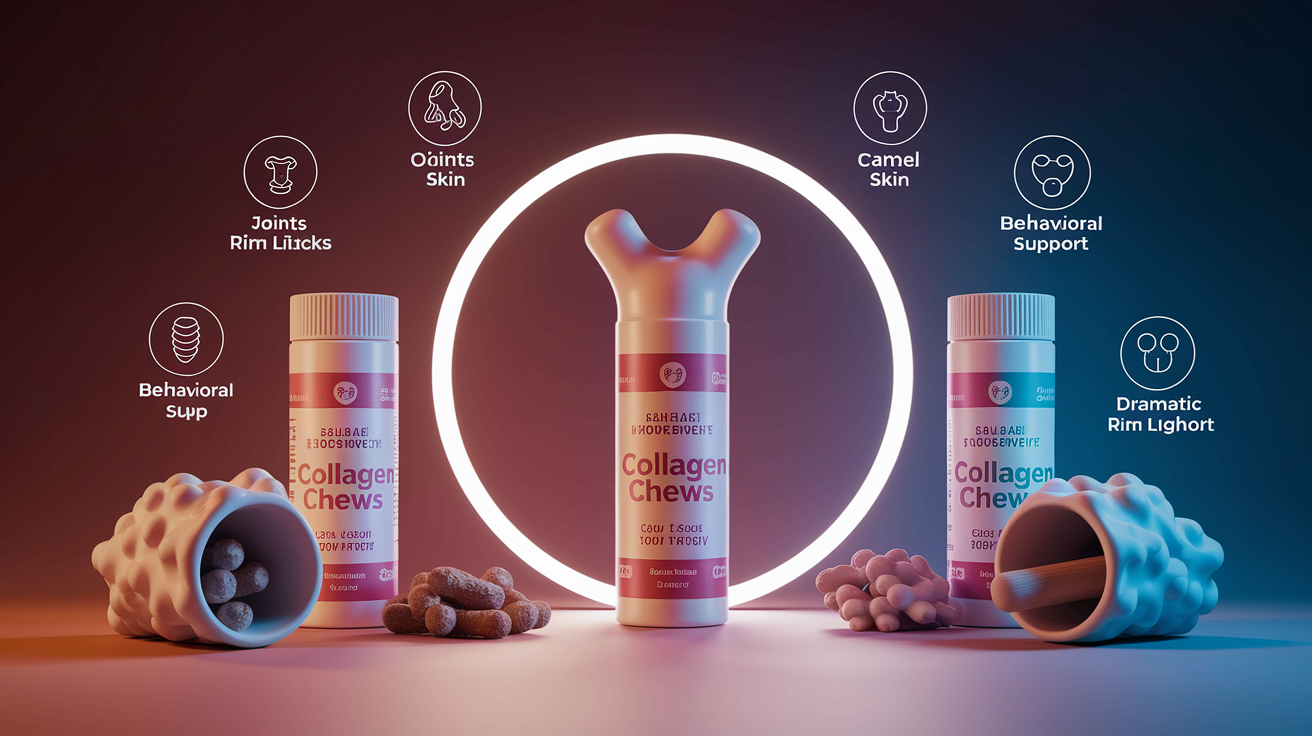
Collagen chews do more than keep your dog busy. They support joint health, skin elasticity, and coat condition through the collagen protein itself, which breaks down into amino acids that contribute to connective tissue repair. For large breeds prone to hip dysplasia or arthritis, a daily collagen chew doubles as a joint supplement and a dental tool. Gullet sticks bring similar benefits through their high chondroitin content, which supports cartilage health and can reduce inflammation in aging joints.
Camel skin treats serve a different niche by offering a novel protein source for dogs with sensitivities or allergies to common meats like beef and chicken. If your dog has shown signs of food intolerance (itchy skin, digestive upset, or chronic ear infections) switching to a novel protein chew can help identify whether beef-based treats were contributing to the problem. The slow gnawing required by camel skin’s tough texture also provides behavioral support for anxious dogs who benefit from extended low-intensity activity.
Collagen chews: Support joint, skin, and coat health; soften during chewing for safe digestion
Gullet sticks: Rich in chondroitin for cartilage and joint support; moderate durability for daily use
Camel skin treats: Novel protein option for dogs with beef or chicken sensitivities; tough texture encourages slow, focused chewing
Dehydrated sweet potato slices: High fiber for digestive health; gentle on sensitive stomachs; suitable for low-protein days
Beef cheek rolls: Single-ingredient simplicity with dense texture; low odor for anxious dogs in calm indoor environments
Owner Checklist for Choosing the Right Dental Chews for Strong-Jawed Large Breeds

Start by matching chew size to your dog’s mouth and jaw strength. If the entire chew can fit inside their mouth, it’s too small and poses a choking risk. Prioritize single-ingredient options with clear sourcing to ensure digestibility and reduce the chance of blockages or allergic reactions. Check hardness by understanding your dog’s chewing style: patient gnawers can handle firmer textures, while aggressive biters need chews that soften gradually to prevent tooth fractures.
Chew must be larger than your dog’s mouth to prevent choking.
Choose single-ingredient, clearly sourced options (beef muscle, cheek, esophagus, camel skin).
Match hardness to chewing style: softer for aggressive biters, firmer for patient gnawers.
Verify the chew softens with saliva; avoid rock-hard materials like cooked bones or antlers.
Factor chew calories into daily feeding totals to prevent overfeeding.
Supervise all chew sessions, especially when introducing a new product.
Discard chews that develop cracks, sharp edges, or become small enough to swallow.
Rotate chew types weekly to maintain interest and spread dental wear across different textures.
For sensitive stomachs, choose highly digestible natural chews over rawhide or synthetic options.
Consider multi-benefit chews (collagen for joints, gullet for chondroitin, camel skin for novel protein) to address secondary health needs alongside dental care.
Final Words
Picking the right heavy-duty chew matters. Monster bully sticks, camel skin, beef cheek, and gullet sticks each hit different marks for durability, digestibility, and dental benefit.
Match size and hardness to your dog’s jaw, watch wear patterns, and swap chews before they become a hazard. Follow the safety and breed-specific tips from the article and you’ll keep teeth clean without overdoing calories.
With these practical picks and the guidance above, you’ll have a short list of dental chew options for large strong-jawed breeds that are safe, long-lasting, and actually used. Treat time that helps clean teeth and builds trust.
FAQ
Q: What is the safest chew bone for large dogs?
A: The safest chew bone for large dogs is a large, single-ingredient edible chew, like beef cheek or collagen bully-style sticks, that softens with saliva; avoid rawhide and cooked bones, and supervise.
Q: What are the long lasting chews for big dogs?
A: Long-lasting chews for big dogs are monster bully sticks, standard bully sticks, camel skin, and dense beef cheek; for non-edible options, choose heavy-duty rubber or nylon toys and supervise for wear.
Q: What is the most effective dental chew for dogs?
A: The most effective dental chew for dogs is a VOHC-approved edible dental stick that provides mechanical friction, like bully-style or collagen chews, to reduce plaque and tartar when used regularly.
Q: What to give dogs that are aggressive chewers?
A: For dogs that are aggressive chewers, give oversized, dense chews, like monster bully sticks, camel skin, or beef cheek, or heavy-duty rubber or nylon toys; avoid rawhide, ultra-hard cheeses, and cooked bones, and supervise closely.