

What if your dog’s favorite chew is actually making their arthritis worse?
Chewing hard or for a long time can strain sore jaws, necks, and shoulders, and dogs with hip pain often shift forward so long gnawing becomes a chore.
Soft treats break apart fast, need little jaw pressure, and are easy to portion so you don’t add extra weight to painful joints.
Many soft options also include glucosamine or omega-3s for joint support.
Bottom line: soft treats are usually the kinder, safer choice, though gentler collagen-style chews can work if your dog handles them comfortably.
Best Treat Type for Dogs with Arthritis

Soft treats work better for dogs with arthritis. They don’t need much jaw pressure to chew, so there’s less strain on inflamed joints around the neck, jaw, and shoulders. Dogs dealing with hip or leg pain often shift their weight forward, and anything that makes them chew for a long time just makes eating harder. Soft treats break apart fast. Your dog can swallow quickly without all the grinding that harder chews need. It’s like the difference between biting an apple and eating applesauce when your jaw hurts.
They’re usually smaller too, which helps when you’re watching calories to keep extra weight off those painful joints. A lot of soft options are made for senior dogs or dogs with mobility trouble, and they come with joint ingredients like glucosamine or omega-3s already mixed in. You can keep them in a treat pouch, break them up for training, and hand them out without wondering if your dog’s gonna struggle halfway through.
Not all chews are out of the question, though. Some softer ones like collagen sticks or gullet strips can work if your dog’s teeth are still good and they like longer treats. Just watch how they handle it. If you see head-tilting, slow chewing, or them giving up after a few bites, go with something gentler.
When you’re picking treats for a dog with arthritis, look for:
- Soft enough to break with light pressure
- Small or easy to break up for calorie control
- Packed with joint ingredients like glucosamine or chondroitin
- No hard edges or brittle spots that could crack teeth
Comparing Chews vs Soft Treats for Arthritic Dogs

Soft treats have more moisture, which keeps them easy to bite through. They’re built to dissolve fast or crumble without much effort, so your dog gets the reward without grinding away at it. That’s perfect for dogs whose arthritis hits the neck, jaw, or front legs. Those areas take most of the load when a dog holds and chews something tough. Soft treats also make it easier to hide pills or supplements if you need to, and they’re almost always better for portioning out during training.
Chews come in all kinds of textures. Moderate ones like beef gullet or collagen sticks have some give and can keep your dog busy without being crazy tough like a bully stick or antler. Hard chews do keep dogs engaged longer and scrape plaque off teeth, but they need strong jaws and a stable posture. Both of those can be compromised when arthritis is in the picture. If your dog already has dental problems, missing teeth, or trouble eating kibble, hard chews aren’t a good fit. Even moderate chews should be supervised, sized right, and only offered if your dog can grip and chew without looking uncomfortable.
| Texture Type | Benefits | Drawbacks |
|---|---|---|
| Soft Treats | Easy to chew, low jaw strain, quick portion control, often contain joint supplements | Shorter shelf life, higher moisture requires proper storage, less dental scraping benefit |
| Moderate Chews | Some enrichment value, natural collagen/glucosamine content, easier than hard chews | Still requires sustained chewing, not suitable for dogs with severe dental or mobility issues |
| Hard Chews | Long-lasting, good dental abrasion, high engagement | High fracture risk, demands strong jaw and stable posture, difficult for arthritic or senior dogs |
Safety, Dental Health, and Mobility Considerations

Arthritis doesn’t just mess with a dog’s legs. When joints in the neck, spine, or shoulders get stiff or painful, your dog might struggle to hold a chew in place or tilt their head the way they need to gnaw comfortably. You might see them pick up a chew, drop it, and walk away. Not because they don’t want it, but because the position needed to work through it actually hurts. Soft treats skip that problem completely. Your dog can swallow them fast or chew lightly without needing to brace or push hard.
Dental health gets more fragile as dogs age, and arthritis often shows up right around the same time as gum disease, worn teeth, or missing molars. Hard chews can crack weakened teeth, especially the big premolars and carnassials dogs use to grip and crush. A fractured tooth isn’t just painful. It usually needs to be pulled under anesthesia, which carries more risk for older dogs. If your dog already has sensitive gums, recession, or visible tartar, check with your vet before giving them anything harder than what you could dent with your thumbnail.
Comfort counts just as much as safety. Even if your dog can technically chew something hard, the repetitive motion can aggravate inflamed joints and leave them sore later. Soft treats let you reward, train, and hang out without adding strain to an already rough day. If you do offer a chew, save it for when your dog’s rested, pain is managed, and they can lie down comfortably. And even then, pick the gentlest option that still feels like a real treat.
Ingredient Quality and Joint-Support Additives

Joint ingredients can help slow down cartilage breakdown, calm inflammation, and improve how your dog moves over time. Glucosamine and chondroitin are the most common. They support cartilage repair and the cushioning fluid inside joints. Omega-3 fatty acids, usually from fish oil, reduce overall inflammation and can cut down on stiffness after rest. Turmeric and curcumin offer natural anti-inflammatory benefits, though how well they absorb depends on the formula. Green-lipped mussel packs omega-3s and glucosamine together, and one study found it reduced arthritis pain in 83% of dogs after six weeks. Collagen and bone broth support connective tissue and go easy on digestion, so they’re simple to work into soft treat recipes.
Soft treats have a clear edge when it comes to delivering these ingredients. Makers can blend liquid fish oil, powdered supplements, or pureed veggies right into the dough or paste, so every bite gets an even dose. You’ll see soft joint chews with exact milligram counts of glucosamine or EPA/DHA per treat, which makes it easy to dose and track. Freeze-dried soft bites lock in nutrient-rich stuff without extra moisture, and spreadable pastes or bone broth toppers let you adjust portions based on your dog’s size and daily calorie needs.
Chews rely more on what’s already in the base material. Beef trachea, gullet, and collagen sticks have chondroitin and glucosamine because they’re made from cartilage-heavy animal parts. Those are whole-food sources, which some people prefer, but the nutrient content isn’t standardized. One stick might give more joint support than the next depending on the cut and how it’s processed. If you’re counting on chews as your main joint delivery method, you’ll probably need to add a separate supplement to hit therapeutic doses consistently.
Key joint ingredients to look for in treats:
- Glucosamine supports cartilage repair and joint fluid production
- Chondroitin sulfate protects existing cartilage and reduces inflammation
- Omega-3 fatty acids (EPA/DHA) reduce overall inflammation and joint stiffness
- Green-lipped mussel concentrated omega-3s plus natural glucosamine (83% improvement in pain after six weeks in one study)
- Turmeric/curcumin natural anti-inflammatory, absorbs better with black pepper or fat
- Collagen and bone broth support connective tissue, cartilage, and gut health
Always check the ingredient list for quality animal protein as the first ingredient. Skip treats loaded with fillers, added sugars, or artificial preservatives. Those extras pack on empty calories and can trigger low-grade inflammation, which works against what the joint supplements are trying to do. If your dog has known food sensitivities, go with limited-ingredient or single-protein options to avoid flare-ups that might hide whether the joint support is actually working.
Recommended Treat Types and Examples
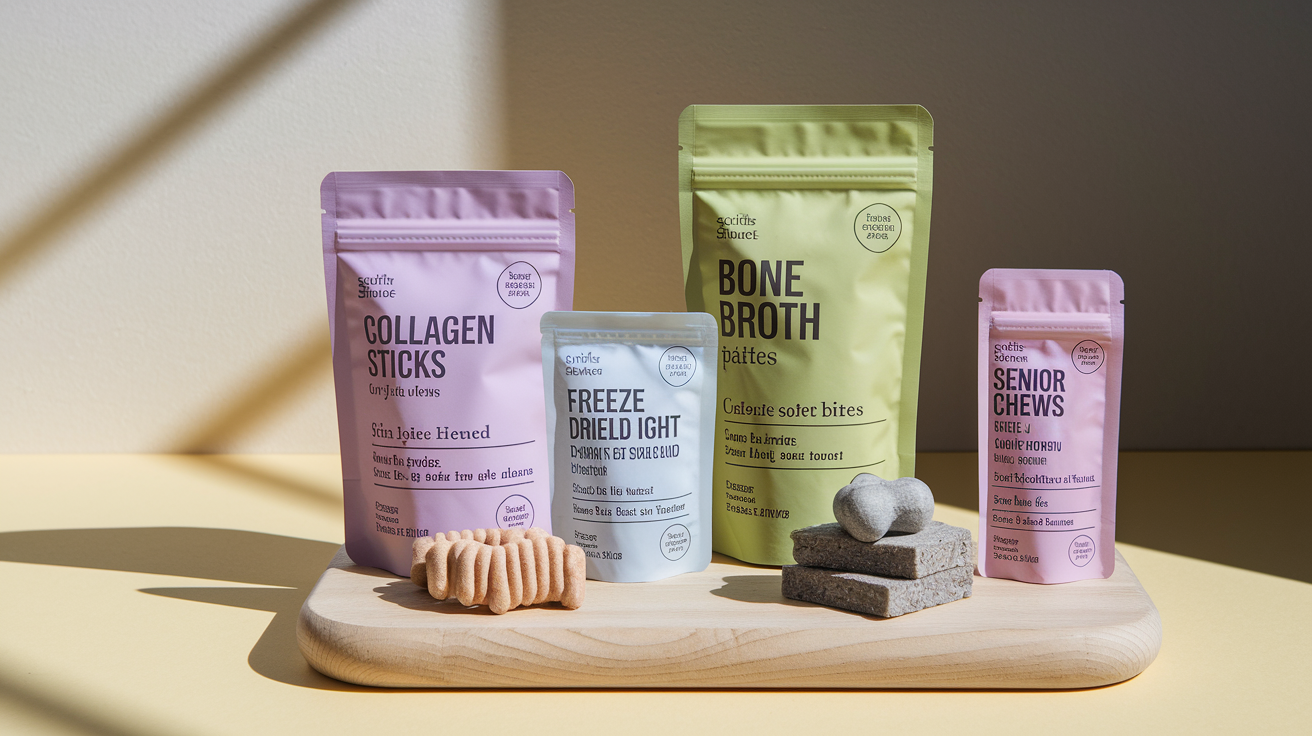
The best treats for arthritic dogs mix joint ingredients with a texture that’s easy to chew and portion. You want options that deliver real benefit without adding physical strain or extra calories. The categories below cover the most practical formats, all of which work well for senior dogs, dogs with dental trouble, or dogs managing mobility problems.
- Soft joint chews or gummies formulated with glucosamine, chondroitin, and omega-3s, easy to break into smaller pieces for training or lower-calorie snacking
- Collagen sticks or collagen-based soft chews naturally support cartilage and connective tissue, softer than traditional bully sticks and easier on the jaw
- Freeze-dried soft bites nutrient-dense with minimal moisture, crumble easily and often include organ meat or fish for omega-3 content
- Bone broth pastes or liquid supplements spreadable or pourable, great for dogs who struggle with any solid chewing, mix into meals or freeze in molds for enrichment
- Senior dental chews with reduced hardness designed to offer some plaque control without the fracture risk of traditional hard dental chews, look for products labeled “senior” or “gentle”
Choose based on your dog’s current dental condition and arthritis severity. If your dog has missing teeth, painful gums, or visible trouble with kibble, stick to the softest options: pastes, freeze-dried bites, or gummy-style chews. If teeth are still strong but joints are stiff, moderate chews like collagen sticks can work as long as you supervise and your dog can lie down comfortably to chew. Always match the treat size to your dog’s mouth, break larger pieces into smaller portions to control calories, and watch the first few times you offer a new texture to make sure your dog isn’t struggling or holding their head weird.
Final Words
Soft treats usually win for dogs with arthritis because they need less jaw pressure and can carry joint-support ingredients like glucosamine and omega-3s. Chews can offer longer engagement but may be tough if your dog has dental pain or limited mobility.
Match your choice to your dog’s mobility, dental health, and taste. Try small samples and watch how easily they eat them.
So, are chews or soft treats better for dogs with arthritis? Soft treats are generally better, and that small swap can make treat time more comfortable and joyful.
FAQ
Q: What treats are good for dogs with arthritis?
A: The best treats for dogs with arthritis are soft, moist, easy-to-chew bites with joint-support ingredients like glucosamine, chondroitin, and omega-3s. Choose small portions, low calories, and limited ingredients for sensitive tummies.
Q: What foods aggravate arthritis in dogs?
A: Foods that aggravate arthritis in dogs include high-calorie or fatty treats that promote weight gain, heavily processed foods, and ingredients linked to inflammation like excess saturated fats and added sugars.
Q: What do vets recommend for arthritis in dogs? / What is the best thing for senior dogs with arthritis?
A: Vets recommend weight control, pain management, joint supplements (like glucosamine), regular low-impact exercise, and home comfort. For senior dogs, vets also suggest softer treats, cushioned bedding, and individualized treatment plans.