
Think the toughest chew is the safest? Not always.
Power chewers need long-lasting natural chews that hold up to relentless gnawing without splintering or turning into choking hazards.
This post picks the best long-lasting natural chews safe for power chewers, like yak chews, elk antlers, bully sticks, olive wood, collagen sticks, and beef tendons, and gives simple sizing and safety tips so you can pick options that keep your dog busy, protect teeth, and avoid tummy trouble.
Best Long‑Lasting Natural Chews for Power Chewers

Power chewers need chews that can take relentless gnawing without splintering, dissolving in minutes, or turning into choking hazards. Natural options beat synthetic chews on both safety and digestibility, giving your dog hours of engagement while supporting dental health and jaw strength. The best materials combine density, texture variety, and simple ingredients to keep even the most determined chewers busy.
-
Yak chews – Smoke-dried milk, lime, and salt. Extremely dense and digestible, lasting anywhere from multiple sessions up to weeks depending on your dog.
-
Elk antlers – Naturally shed, very dense, long-lasting without splintering. Good for sustained gnawing but harder than tooth enamel, so you’ll need to supervise.
-
Bully sticks – Single-ingredient 100% beef. Fully digestible and lasts one to several sessions depending on how intense your dog chews.
-
Olive wood – Harvested from pruned trees. Durable, low-splinter, naturally antibacterial. Breaks into fibrous bits rather than sharp shards.
-
Collagen sticks – Made from beef hide. Denser and more digestible than rawhide, plus they contribute to joint and skin support.
-
Beef tendons – Chewy, stretchy, high in protein and glucosamine. Gentler than rock-hard options while still offering satisfying resistance.
Durability varies by dog size, jaw strength, and chewing style. A yak chew that occupies a 15-pound terrier for a week might last a 70-pound retriever only a few sessions. Same goes for antlers and collagen sticks. What counts as “long-lasting” depends on your dog’s approach.
For aggressive chewers who demolish standard toys in minutes, prioritize density over hardness. Dense chews require more work per bite, extending engagement time without risking cracked teeth. Rotating between harder options like yak chews and softer choices like bully sticks keeps sessions interesting and reduces the risk of dental wear from a single texture.
Safety Guidelines for Natural Chews

Safety starts with choosing chews larger than your dog’s muzzle and monitoring every session, especially the first time you introduce a new material. Even the safest natural chew can pose risks if sized incorrectly or left unsupervised with a dog who gulps rather than gnaws.
• Proper sizing – Pick chews larger than your dog’s muzzle. When you’re uncertain, size up to prevent swallowing whole pieces.
• Supervision – Always supervise the first session to see how your dog chews and whether it fragments. Keep monitoring until you’re confident the chew is safe for that specific dog.
• Hardness checks – Skip chews harder than tooth enamel if your dog has a history of dental fractures. Test by pressing a thumbnail into the surface. If it doesn’t leave a mark, the chew may be too hard.
• Discard point – Remove chews when they shrink to about 1 inch or smaller than your dog’s muzzle to prevent choking.
• Allergy awareness – Introduce one new chew type at a time and watch for digestive upset or skin reactions over 24 hours before making it a regular option.
Start with 15 to 20 minute sessions and increase gradually over one week. Provide fresh water during and after chew time, since dense, dry chews can increase thirst and help digestion.
Material Comparison: Durability, Hardness, and Digestibility

| Material | Longevity Level | Digestibility | Safety Notes |
|---|---|---|---|
| Elk antlers | Very high (weeks to months) | None (indigestible) | Harder than tooth enamel; can cause slab fractures; supervise closely |
| Yak chews | High (days to weeks) | Fully digestible | Dense but softer than antlers; microwave remnants for crunchy puff |
| Bully sticks | Moderate (one to several sessions) | Fully digestible | Safe for most dogs; monitor chewing speed and remove when small |
| Olive wood | High (weeks) | None (splinters into fibrous bits) | Low-splinter; naturally antibacterial; discard when too small |
| Collagen sticks | Moderate to high (several sessions) | Fully digestible | Gentler than rawhide; supports joint health; good for sensitive stomachs |
| Beef tendons | Low to moderate (one to few sessions) | Fully digestible | Chewy texture; high in glucosamine; easier on teeth than hard chews |
If digestibility is your top priority, stick with yak chews, bully sticks, collagen sticks, or beef tendons. If you need maximum longevity and your dog has healthy teeth, elk antlers and olive wood deliver weeks of engagement. Dogs who gulp large pieces should avoid antlers and olive wood entirely and focus on digestible options that break into smaller, softer fragments.
Matching Chews to Dog Size and Chewing Strength
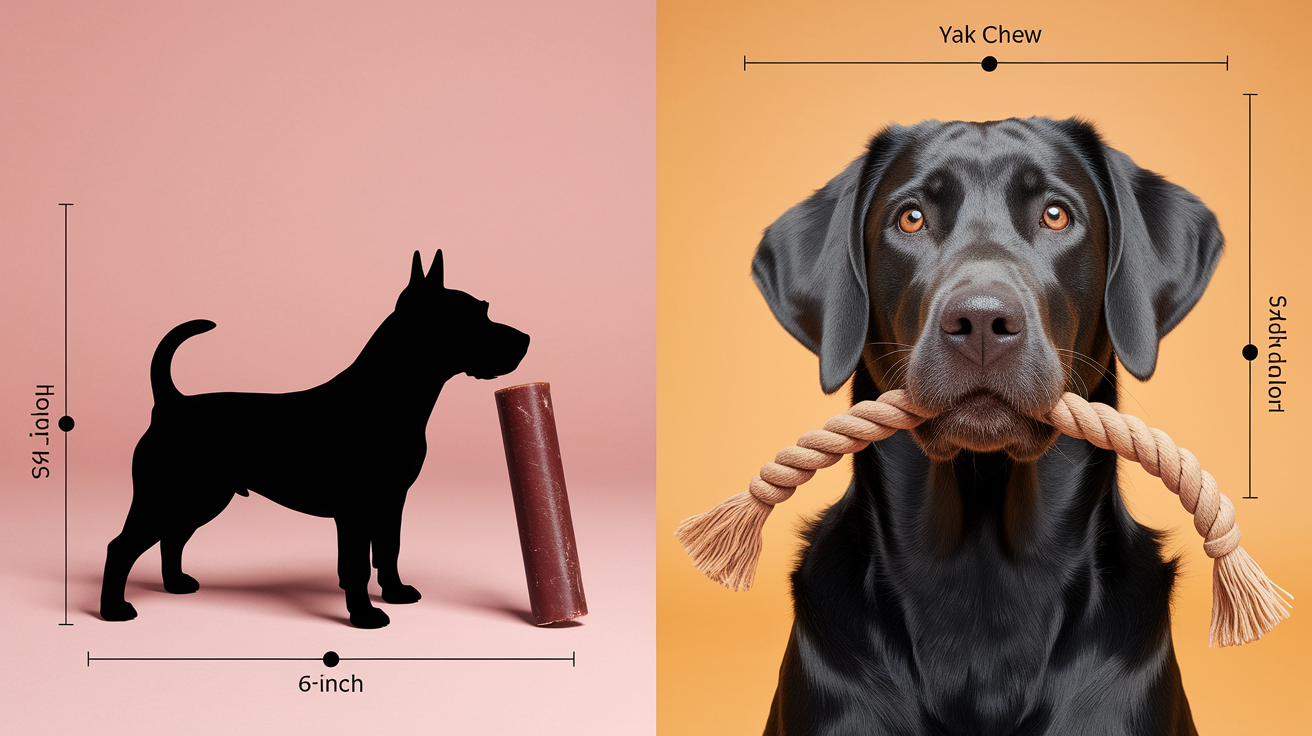
A chew sized for a 15-pound dog becomes a choking hazard for a 70-pound power chewer who can break it down in seconds. Sizing up not only prevents choking but also extends the useful life of the chew, giving you better value and your dog safer engagement.
Small dogs under 20 pounds do well with 6-inch bully sticks, thin collagen sticks, or small yak chews. Medium dogs between 20 and 50 pounds need 12-inch braided bully sticks, standard collagen sticks, or medium yak chews.
-
Length – Choose chews at least as long as your dog’s muzzle to prevent swallowing whole.
-
Thickness – Power chewers need extra-thick or braided options. Light chewers can use standard diameters.
-
Density – Match density to jaw strength. Yak chews and antlers for relentless chewers, bully sticks and tendons for moderate strength.
-
Breed-appropriate materials – Brachycephalic breeds (bulldogs, pugs) may struggle with very hard chews. Opt for bully sticks or collagen sticks instead.
Large and giant dogs over 50 pounds should start with 12-inch standard bully sticks to gauge chewing intensity, then move to extra-thick, braided, or cold-dried versions if the dog finishes quickly. For extreme chewers, yak chews and elk antlers provide the longest engagement, but always supervise the first few sessions to confirm safe gnawing behavior.
Vet Recommendations and Evidence‑Based Insights

Many vets recommend avoiding extremely hard antlers and hooves for dogs with dental disease or a history of tooth fractures, since these materials can exceed the hardness of tooth enamel and cause slab fractures that require extraction. Digestible chews like collagen sticks and bully sticks earn broader endorsement because they break down safely in the digestive tract.
The American Animal Hospital Association states that durability shouldn’t come at the cost of digestibility. Chews that don’t break down in the stomach (rawhide, nylon, rubber) pose high blockage risk, especially for aggressive chewers who can tear off large chunks. Today’s Veterinary Practice journal identifies airway obstruction and intestinal blockage as the primary risks with chews that resist digestive breakdown.
Vets often suggest a simple thumbnail test. Press your thumbnail into the chew surface. If it leaves a slight indent, the chew is likely safe for most dogs. If it doesn’t budge, the chew may be too hard for dogs with compromised teeth or aggressive gnawing styles. For puppies under six months or senior dogs with weakening teeth, softer options like beef tendons, bully sticks, or collagen sticks offer a better balance of durability and safety.
Longevity Expectations: What Lasts the Longest?

Elk antlers and dense yak chews top the longevity rankings. Often lasting from a few sessions to multiple weeks depending on the dog’s size and chewing intensity. A single elk antler can occupy a power chewer for months if rotated with other chews to prevent boredom and dental wear.
Olive wood and collagen sticks sit in the middle tier, offering several sessions of engagement for most dogs. Bully sticks and beef tendons last from a single session up to a few sessions, but their full digestibility and high protein content make them good for daily or frequent use without stomach upset.
• Longest lasting – Elk antlers, yak chews (weeks to months)
• Moderate durability – Olive wood, collagen sticks (several sessions to weeks)
• Shorter-lasting but highly digestible – Bully sticks, beef tendons (one to few sessions)
• Lifespan extenders – Freezing chews overnight, using bully stick holders, and limiting sessions to 30 to 45 minutes can double or triple engagement time
Freezing a yak chew or bully stick after soaking it in water or broth for 10 minutes extends consumption time by two to three times and provides cooling relief during teething or hot weather. Rotating between chew types (switching from a hard yak chew one day to a chewy bully stick the next) keeps dogs interested and reduces the risk of overworking a single tooth surface.
Cost, Value, and Where to Buy
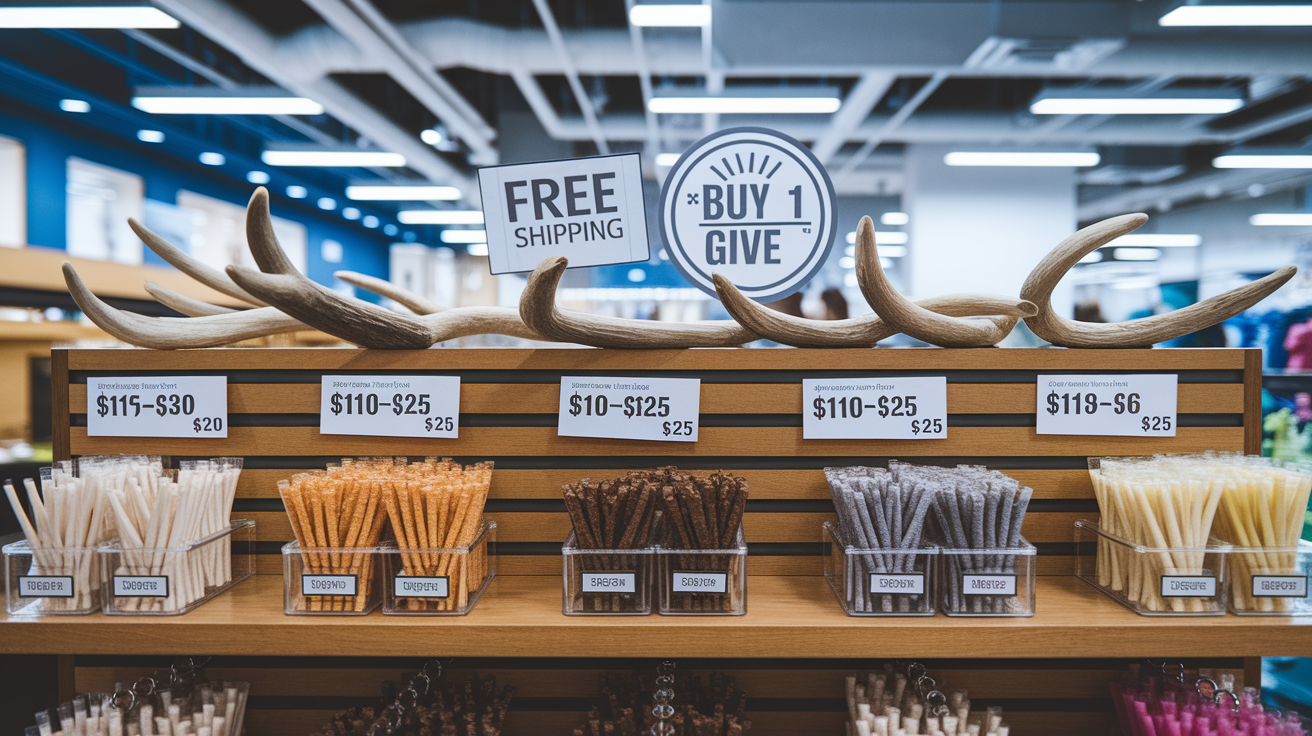
Elk antlers and yak chews sit at the high end of the pricing spectrum, often costing two to four times more per unit than bully sticks or beef tendons. But their extreme durability means the cost per hour of chewing can actually be lower than cheaper options that disappear in one session.
Bully sticks and collagen sticks offer moderate pricing and good value for dogs who need frequent chewing opportunities without breaking the budget. Buying in bulk (6-packs, 12-packs, or larger buckets) can lower the per-chew cost significantly and make sure you always have a safe option on hand.
| Chew Type | Average Price Range | Typical Duration |
|---|---|---|
| Elk antlers | $15–$30 per antler | Weeks to months |
| Yak chews | $10–$25 per chew | Days to weeks |
| Bully sticks | $1–$5 per stick | One to several sessions |
| Collagen sticks | $2–$6 per stick | Several sessions |
Look for retailers offering free shipping thresholds, satisfaction guarantees, and third-party lab testing to confirm ingredient purity and safety. Programs like “Buy 1 Give 1” for yak chew buckets add social value, donating a bag to a rescue for each bucket purchased. Prime memberships or minimum order amounts around $25 to $79 often unlock free shipping, making bulk purchases more economical.
Final Words
Start by matching chew type to your dog’s bite, durability, digestibility, and safety are the things that matter. We ran through top picks (yak, antler, bully stick, olive wood, collagen, tendons), safety rules, material trade-offs, sizing tips, vet-backed advice, and which options last longest.
Use what you learned to pick the right size and supervise smartly. With the right choice, treat time stays safe, rewarding, and calm, long lasting natural chews safe for power chewers make walks, training, and downtime better for both of you.
FAQ
Q: What is the best natural chew for heavy chewers? What are the longest lasting natural chews for dogs? What chews are safe for aggressive chewers?
A: The best natural chews for heavy, aggressive chewers and the longest-lasting options are antlers, yak chews, and olive wood; antlers last longest, yak balances durability and digestibility, and always supervise.
Q: What words do dogs hear best?
A: Dogs hear high-pitched, short, clear words best, so use one-syllable commands like “sit,” “come,” or “no” in a higher, steady pitch and keep background noise low.