
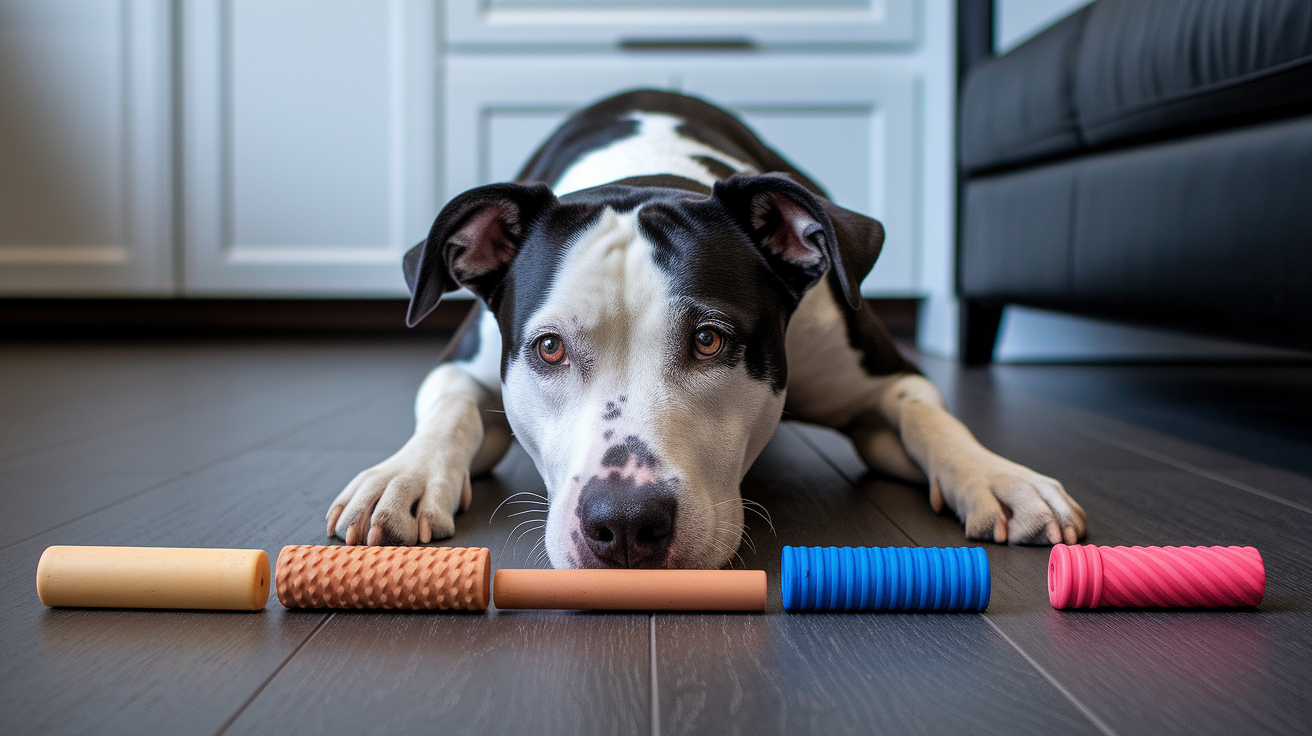
Not all “indestructible” chews are actually safe.
If your dog chews like a wrecking ball, you need materials that resist gnawing without splintering or turning into choking hazards.
This guide shows the safest, long-lasting options that actually hold up, like yak cheese, vet-grade natural rubber, chew-grade nylon, elk antlers, and dense collagen.
You’ll learn what holds up, how to size and inspect chews, and when to step in so chew time stays safe.
Key Safe Materials for Durable Dog Chews That Withstand Aggressive Chewing
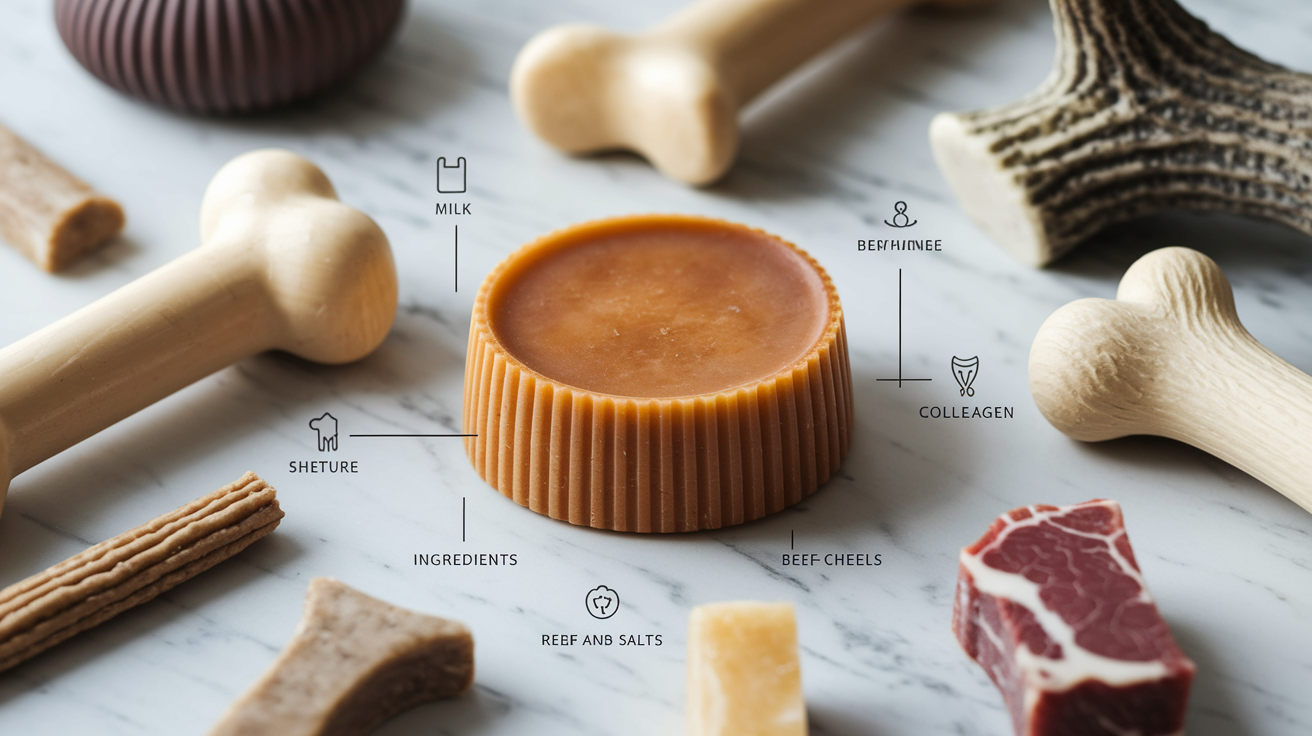
When your dog treats every chew like a demolition project, you need materials that actually hold up without putting them at risk. The safest chews combine high density, short ingredient lists, and low moisture.
Yak cheese chews stand out here. Just three ingredients (milk, lime, salt), smoke-dried for weeks to create an incredibly dense structure. These can last anywhere from a few sessions to weeks depending on your dog’s size and chewing intensity. Once the piece gets down to about an inch, you can soak it and microwave it for roughly 45 seconds to puff it into a final crunchy treat.
Veterinary-grade natural rubber and chew-grade nylon also deliver serious durability for power chewers. Solid rubber absorbs the force of aggressive gnawing without splintering. Nylon offers very high abrasion resistance, but you’ll need to watch for sharp edges as it wears down. Both materials stay non-edible, so they work well for dogs who methodically wear down a chew rather than trying to swallow chunks.
Dense natural edibles round out the safest options:
Yak cheese chews – High protein, low fat, grain-free. Last from sessions to weeks. Puff when microwaved once small.
Veterinary-grade natural rubber – Non-edible, shock-absorbing, low splinter risk for repeated chewing.
Chew-grade nylon – Very abrasion resistant but requires monitoring for tooth wear and sharp fragments.
Collagen sticks – Beef-hide collagen alternative to rawhide. Denser, safer, supports joint and skin health.
Elk antlers (shed) – Extremely dense, minimal splinter risk compared to cooked bones.
Beef cheek collagen – Rich in collagen, longer-lasting than many traditional chews, easier to digest than rawhide.
Size matters as much as material. A chew that’s too small for your dog’s muzzle becomes a choking hazard no matter how safe the material. Choose thickness and length that force your dog to gnaw rather than gulp. Always size up when you’re between options.
Comparing Long-Lasting Chew Materials for Aggressive Chewers
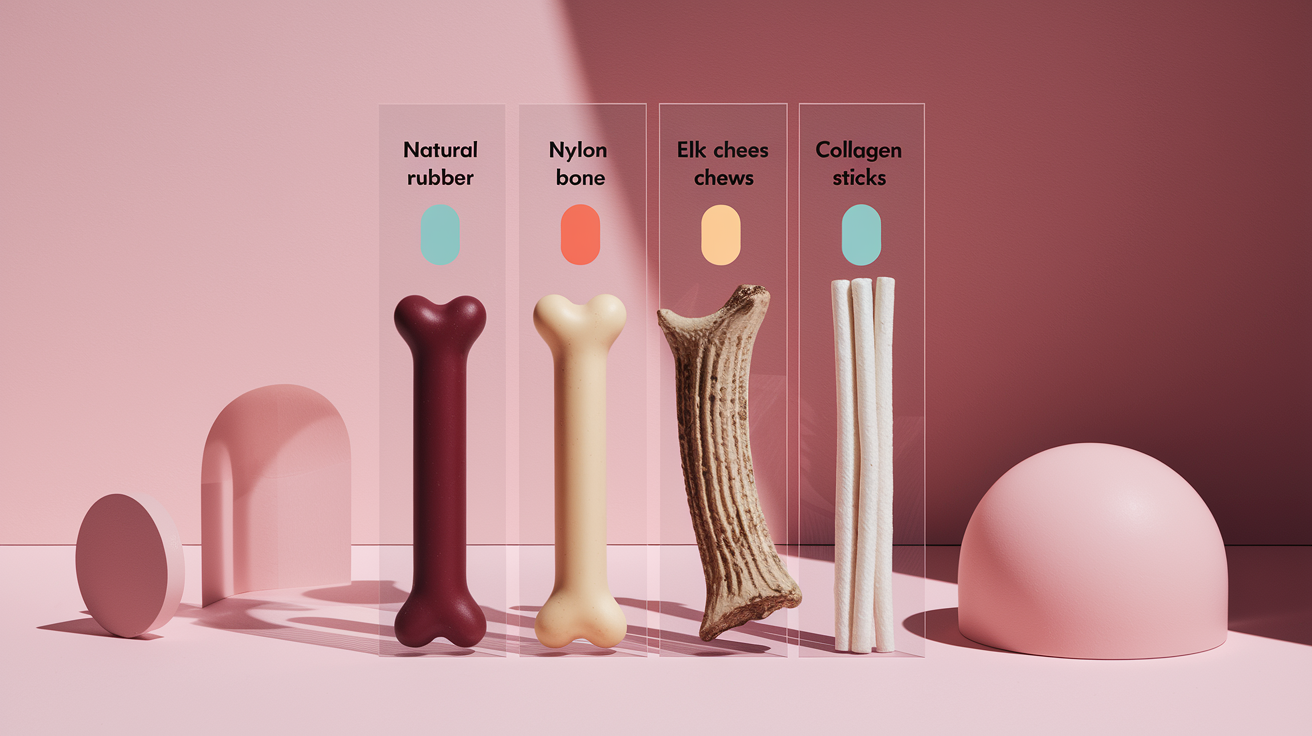
Different materials deliver different trade-offs between durability, digestibility, and tooth safety. Rubber offers medium to high durability with excellent shock absorption, making it gentler on teeth while resisting most aggressive gnawing. Nylon ranks highest for pure abrasion resistance but can develop sharp edges that may wear enamel over time. Edible options like yak cheese chews and elk antlers deliver serious longevity while remaining digestible or naturally shed. No splintering like cooked bones.
Understanding how each material performs helps you match the right chew to your dog’s chewing style and jaw strength. Here’s a direct comparison of the top durable materials:
| Material | Durability Rating | Safety Notes | Typical Lifespan |
|---|---|---|---|
| Natural Rubber (solid, vet-grade) | Medium–High | Shock-absorbing; low splinter risk; gentler on enamel than hard plastics | Weeks to months for most chewers |
| Nylon (chew-grade engineered) | High | Very abrasion resistant; monitor for sharp fragments and tooth wear with extreme use | Weeks to many months depending on bite force |
| Yak Cheese Chews | Medium–High | Fully edible; safer digestion than rawhide; remove when <1 inch; puff final piece in microwave ~45 seconds | Multiple sessions to weeks; faster for heavy chewers |
| Elk Antler (shed) | Very High | Extremely dense; low splinter risk vs cooked bones; may be too hard for some dogs’ teeth | Weeks to multiple months for many dogs |
| Collagen Sticks (beef-hide) | Medium | Denser and safer than rawhide; fully digestible; supports joint/skin health | One to several sessions depending on size and chewer |
Avoiding Unsafe Chew Materials When Choosing Durable Options
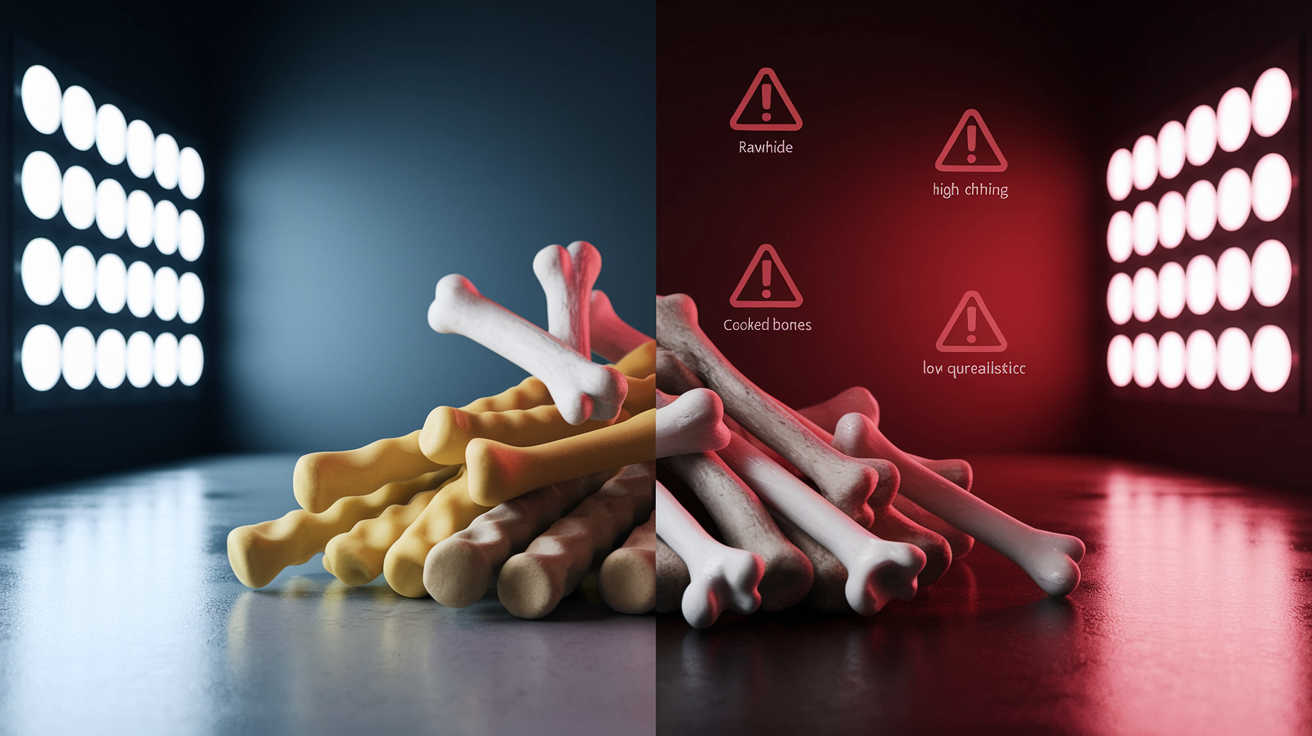
Rawhide and pressed rawhide sit at the top of the avoid list for aggressive chewers. Heavy processing, chemical concerns during tanning, and poor digestibility create real choking and blockage risks. Power chewers often tear off large chunks that expand in the stomach or lodge in the throat. Even “compressed” or “pressed” rawhide variants carry the same fundamental problems. They just market the danger in a denser package.
Cooked bones splinter into sharp shards that can puncture or lacerate the mouth, throat, and digestive tract. The cooking process makes bones brittle in ways that shed antlers and raw options aren’t. Any bone that’s been roasted, baked, or boiled becomes a serious hazard for a dog who chews with real force.
Low-grade plastics and PVC materials may contain phthalates or other toxic additives, and cheap construction means they break into swallowable fragments fast.
Very small chews create an obvious choking risk for large dogs, but the mismatch gets overlooked surprisingly often. A bully stick or collagen chew that’s perfect for a 15-pound dog becomes a gulp-and-choke hazard in the mouth of a 70-pound power chewer. Low-quality dental sticks with long ingredient lists, fillers, and artificial additives deliver less scraping benefit and can trigger digestive upset in sensitive dogs. Choose single or short ingredient lists and size appropriately every time.
Sizing and Shape Guidelines for Long-Lasting Chews Built for Power Chewers
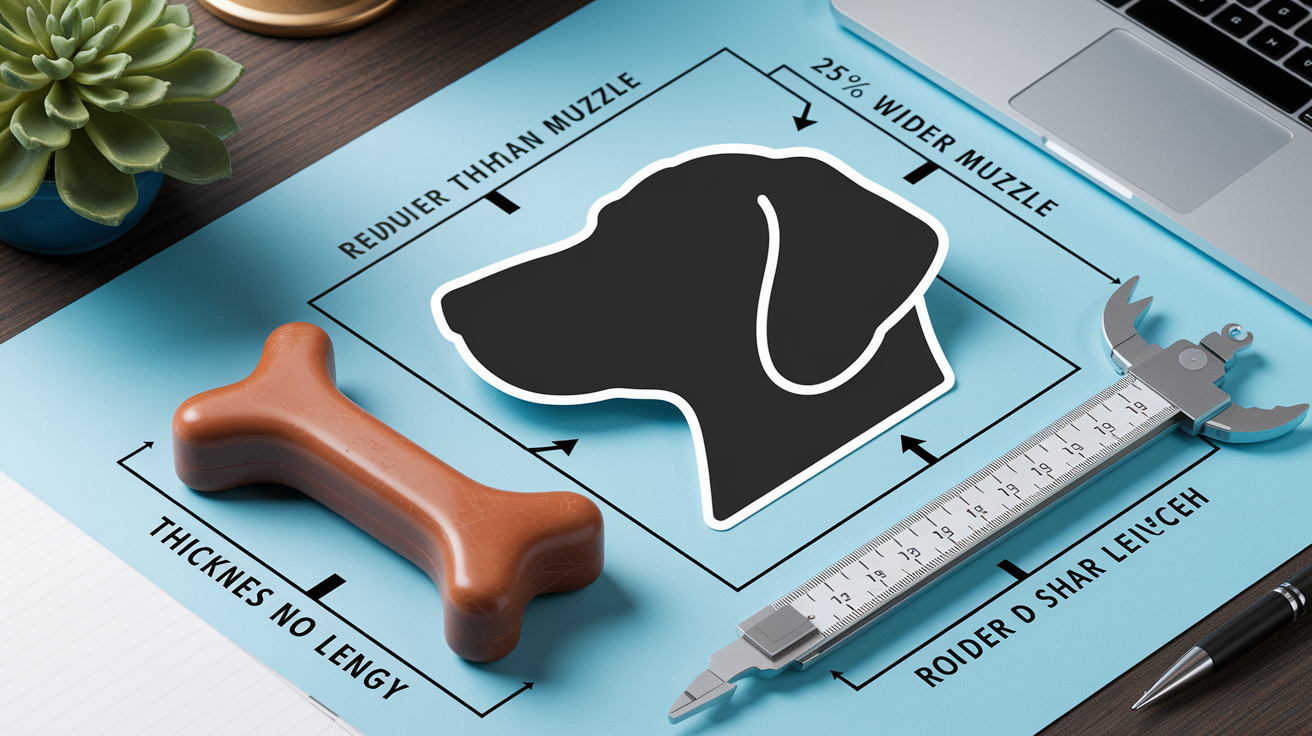
A chew should always measure at least 25 percent wider than your dog’s muzzle opening so they can’t fully enclose it in their mouth. This forces gnawing action rather than swallowing attempts and dramatically reduces choking risk. For practical measurement, hold the chew next to your dog’s closed mouth. If it looks like it could slide past their back molars, size up.
Thickness matters just as much as length. A thin chew snaps under pressure, but a dense, uniformly thick piece distributes bite force and lasts longer.
Shape stability plays a role in how long a chew survives. Round or oval profiles without sharp corners reduce fracture points, so power chewers can’t wedge their molars into a weak spot and crack the material. Yak chews and collagen sticks designed with even density from end to end resist the “find the weak link” strategy many aggressive chewers use.
Quick sizing rules to follow:
Choose chews at least 25% wider than muzzle width to prevent full enclosure and swallowing.
Avoid any chew smaller than one inch in any dimension once your dog has worn it down.
For yak chews specifically, remove and puff when the piece is roughly one inch or smaller.
Match thickness to your dog’s jaw strength. Thicker, denser chews last longer and break less easily under heavy bite pressure.
Safety Guidelines for Using Long-Lasting Chews With Aggressive Chewers

Always supervise the first 10 to 30 minutes with any new chew type so you can see how your dog attacks the material. Some dogs methodically scrape. Others try to crack and swallow chunks. Knowing your dog’s style lets you pick the right density and remove the chew before it becomes a hazard.
Introduce new chews with sessions of 15 to 20 minutes, then check your dog’s stool over the next day to confirm their stomach tolerates the material.
Remove any chew immediately when it develops cracks deeper than roughly a quarter inch, sharp edges, exposed cores, or pieces small enough to swallow whole. For edible chews like yak sticks or bully sticks, the general rule is simple. When the remaining piece is smaller than your dog’s muzzle or roughly one inch, it’s time to take it away. Keep fresh water available during and after chewing sessions, especially with hard, dry materials that increase thirst.
Safe introduction steps:
- Supervise the first 10–30 minutes closely to assess how your dog chews the new material.
- Limit initial sessions to 15–20 minutes and monitor stool for digestive tolerance.
- Offer one chew at a time. Rotate types rather than giving multiple chews simultaneously.
- Remove the chew when it becomes smaller than the dog’s muzzle width or shows cracks, sharp fragments, or thinning.
- Inspect daily for aggressive chewers, weekly for moderate chewers, and discard at the first sign of dangerous wear.
Durability Timelines of Safe Chew Materials for Heavy Chewers
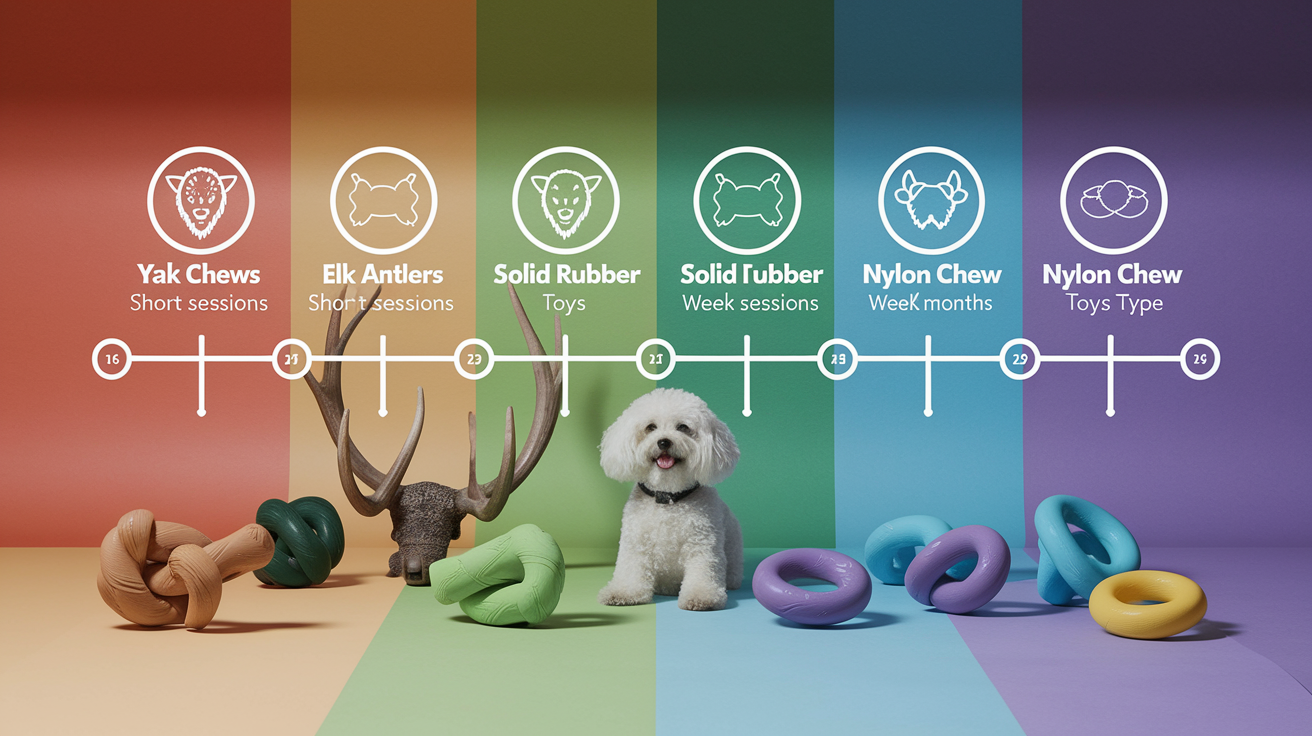
Yak chews and elk antlers deliver the longest timelines for most aggressive chewers. Ranging from a few dedicated sessions up to multiple weeks depending on dog size, bite force, and chewing frequency. Bully sticks and collagen sticks typically last one to several sessions, making them better for daily or frequent use rather than all-day occupiers.
Non-edible toys made from high-density rubber or chew-grade nylon can last weeks to many months if you inspect and rotate them properly. You get better value over time even though the upfront cost runs higher.
| Material | Typical Duration | Notes |
|---|---|---|
| Yak Chews | Few sessions to multiple weeks | Faster for very heavy chewers; puff final <1 inch piece in microwave ~45 seconds |
| Elk Antlers (shed) | Weeks to multiple months | Extremely dense; some of the longest-lasting natural chews available |
| Solid Rubber Toys | Weeks to months | Lifespan depends on rubber density and chewing intensity; inspect for cracks regularly |
| Nylon Chew Toys | Weeks to many months | High abrasion resistance; replace when sharp edges or fragments appear |
Breed-Specific Considerations for Choosing Safe Long-Lasting Chew Materials
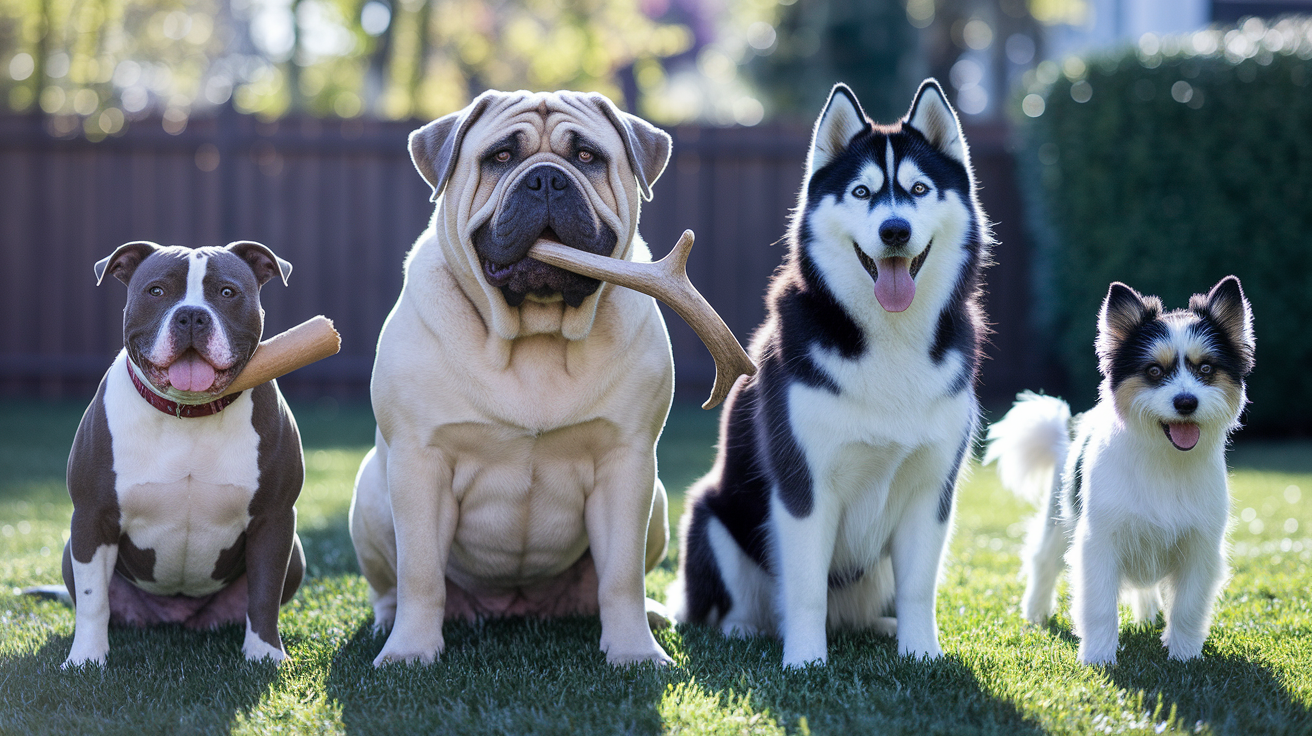
Power breeds like Pit Bulls, Mastiffs, and Rottweilers excel at destroying weak materials within minutes. Their jaw strength and determination mean you need the densest options available. Yak chews, elk antlers, or industrial-strength rubber and nylon toys designed explicitly for extreme chewers. Softer edibles or medium-density chews that work well for many dogs simply won’t survive the first session with these breeds.
Huskies, Malamutes, and other working breeds often “work” a chew methodically rather than trying to demolish it in one go. They’ll gnaw, scrape, and rotate the chew over long sessions, so durable materials like yak cheese or collagen sticks can last surprisingly well. The key is matching density to their stamina. They’ll keep at it for hours if you let them, so the chew needs to hold up under sustained, focused pressure.
Terriers and herding breeds bring a mix of tenacity and problem-solving to chew time. They’ll find weak points, twist, and leverage their way through materials, so avoid chews with seams, glued parts, or uneven density. Solid, single-material construction works best. Think whole yak sticks, one-piece rubber toys, or uniformly dense nylon bones.
Understanding your dog’s breed tendencies helps you skip the trial-and-error phase and go straight to chews that actually survive.
Puppy, Adult, and Senior Differences in Chew Material Safety and Durability

Puppies need softer, more forgiving materials while their adult teeth come in and their jaws develop. Bully sticks, beef gullet, and softer collagen chews work well for teething and early chewing habits. Avoid extremely hard materials like elk antlers or thick nylon during the puppy stage. Developing teeth and gums can’t handle that level of hardness safely, and you risk fractures or discouragement. Consult your veterinarian for age-specific and size-specific guidance, especially during the four to six month teething window.
Adult dogs in their prime can typically handle the full range of durable materials as long as you match hardness to their individual chewing style and tooth health. This is the stage where yak chews, dense rubber toys, and appropriately sized antlers deliver the best mix of safety and longevity. Regular dental check-ups help you catch any wear or damage early so you can adjust chew hardness before problems develop.
Age-specific guidelines:
Puppies (teething stage) – Use softer edibles like bully sticks, beef gullet, or puppy-specific rubber toys. Avoid rock-hard antlers or thick nylon.
Adults (prime years) – Full range of durable materials appropriate. Match density to chewing style and monitor tooth condition during vet visits.
Seniors (weakening teeth) – Shift to lower-hardness options like collagen sticks, softer yak chews, or gentle rubber. Extremely hard materials risk fractures in aging teeth.
All ages – Always supervise new chew introductions and remove when size drops below safe swallowing thresholds.
Responsible Rotation and Maintenance of Long-Lasting Chews
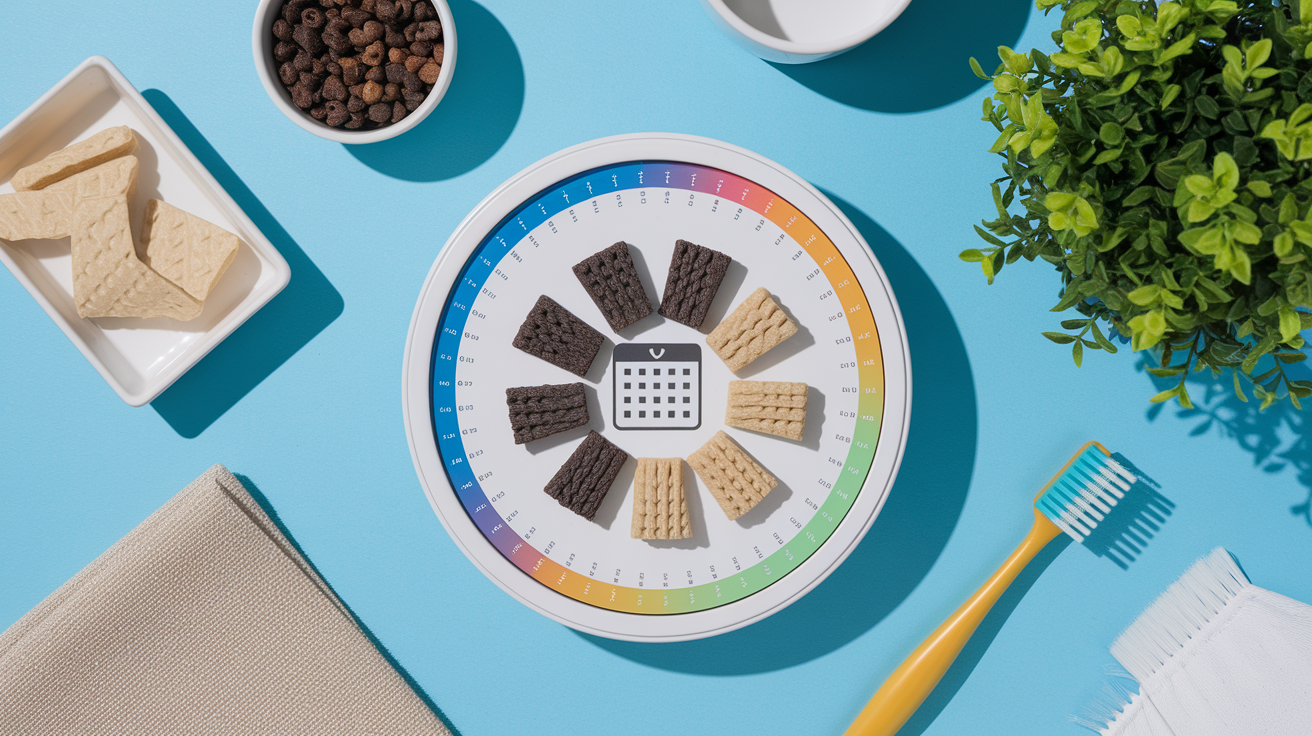
Rotating between two to three chew types reduces boredom and extends the useful life of each chew. When your dog has access to the same chew every day, they lose interest or focus all their destructive energy on that one item. Alternating between a yak chew, a rubber toy, and a collagen stick keeps engagement high and spreads wear across multiple products.
For heavy chewers, inspect chews daily for cracks, sharp edges, or small fragments. Waiting until weekly checks can mean missing a dangerous change.
Cleaning and hygiene matter for reusable chews like rubber and nylon toys. Some manufacturers design their products to be dishwasher-safe, but always verify the label before tossing a chew in with your dishes. Hand-washing with hot water and mild soap works for most materials and helps you inspect the chew closely at the same time.
Maintenance steps:
- Rotate 2–3 chew types weekly to maintain interest and distribute wear.
- Inspect daily for aggressive chewers, weekly for moderate chewers. Look for cracks deeper than 1/4 inch, sharp edges, or exposed cores.
- Wash reusable rubber or nylon chews regularly with hot water and mild soap, or use dishwasher if manufacturer approves.
- Replace any chew immediately when it shows dangerous wear, reduces to swallowable size, or develops splinters/fragments.
- Discard edible chews when they drop below one inch or become thin and fragile enough to break into choking-size pieces.
Cost vs Longevity: How to Choose Safe and Durable Chews That Offer the Best Value
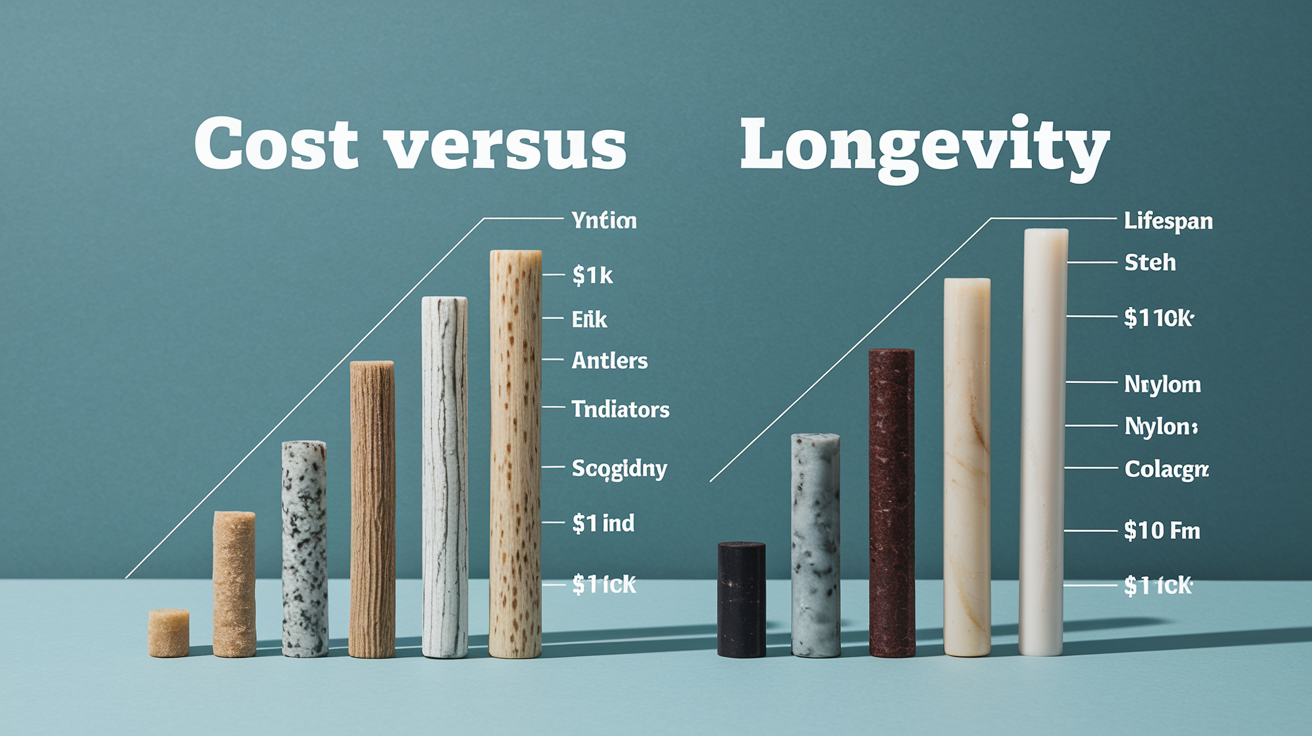
Higher upfront cost often translates to lower replacement frequency and better safety margins. A premium rubber or nylon toy priced around $15 to $40 can last weeks to many months for an aggressive chewer, while cheap plastic or low-density chews might need replacing every few days. When you calculate cost per chewing session, durable materials almost always win.
Edible chews sit in the middle. Yak sticks and collagen chews cost more per piece than rawhide, but they last longer and digest more safely, so the value gap closes fast.
Single ingredient or short ingredient list chews avoid the additive-related safety risks that come with heavily processed products. You pay a bit more for simplicity, but you’re not gambling on mystery fillers, artificial softeners, or questionable preservatives. Higher density usually equals longer chew life and safer chewing, whether you’re choosing an edible option or a reusable toy. Look for weight, thickness, and manufacturer durability ratings when comparing prices. Those specs tell you more than the sticker price alone.
Final Words
When your dog grabs a tough chew, reach for the materials we covered: yak cheese, natural rubber, chew-grade nylon, antlers, and collagen. They’re dense, low-moisture, and built to last.
We walked through sizing and shape rules, which materials to avoid, and safe session tips like watching the first 10–30 minutes and discarding chews under 1 inch.
Use rotation and regular checks to extend life, and match choices to your dog’s age and breed. These safe materials for long-lasting dog chews for aggressive chewers make treat time safer and more satisfying.
FAQ
Q: What is the safest dog chew for aggressive chewers?
A: The safest dog chew for aggressive chewers is a dense, non-toxic option like yak cheese, heavy-duty natural rubber, or vet-grade nylon. Size it correctly and always supervise.
Q: What is the safest material for dogs to chew on?
A: The safest material for dogs to chew on is non-toxic, durable options such as natural rubber, yak cheese, collagen, or shed elk antler. Match density and size to your dog’s jaw strength.
Q: What words do dogs hear best?
A: Dogs hear best high-pitched, short words and sharp consonants. Single-syllable commands like sit, come, here, and your dog’s name work well for clear, fast responses.
Q: What are the longest lasting dog bones for aggressive chewers?
A: The longest lasting dog bones for aggressive chewers are shed elk antlers and yak cheese chews. Heavy-duty rubber and chew-grade nylon also last long, but check wear and remove sharp pieces.